“Kantian ethics are too abstract to be helpful when it comes to sexual ethics.” Evaluate this statement. (40)

Kant never married, there is no evidence that he was romantically involved with anybody and his ethical writings contain few direct references to sex. Because of these well-known biographical details, it is unreasonable to suppose that Kant would struggle when it comes to sexual ethics. Yet, as this essay will argue, his approach to ethics is far from being too abstract to be helpful when making decisions about sex.

Firstly, Kantian Ethics are of clear relevance to making decisions about sex because they concern how we choose to treat people. Kant argued that reason demands that we treat human beings, whether in the person of ourselves or another, always as an end and never as a means to an end. For Kant, human beings are “pathologically loving”, recognising that it is rational to treat other people as we would wish to be treated. This means that in any moral situation – and sex is most definitely a moral situation because it affects human wellbeing like little else – we must consider and protect the interests of all persons equally. This rules out using somebody for pleasure, whether through heterosexual or homosexual intercourse, and only allows sexual activity that is consensual and supportive of both parties’ long-term wellbeing. Marriage would be the obvious (though not necessarily the only) way to ensure properly informed and enthusiastic consent, including as regards possible children, as well as mutual commitment to the others’ wellbeing. Adultery would be ruled out by the impossibility of universalising breaking promises. Casual sex could be as unacceptable as rape, because it is probably underpinned by the same un-universalisable maxim. This means that Kantian Ethics would helpfully reinforce common norms of behaviour, supporting marriage and discouraging adultery, promiscuity and of course sexual abuse and violence. On the other hand, for Kant there is no essential moral difference between heterosexual and homosexual sex, meaning that Kantian Ethics could be more useful than Natural Law in the 21st Century.

Secondly, Kantian Ethics are far more helpful than is Utilitarianism when it comes to making decisions about sex. Act Utilitarianism demands that decisions are made situationally relative to the predicted consequences. Nevertheless, as even the utilitarian Peter Singer admits, it is often not possible to predict consequences accurately. Also, making an objective decision when affected by lust is impractical. As St Augustine rightly observed, lust makes us incapable of doing what we know we should do. It also makes us lie to ourselves to get what we want. For example, if somebody was making a utilitarian calculation about having a one-night-stand, they start by making the assumption that this is a one-night-stand (which might not be the case) and then attempt to calculate their own feelings and that of the other party during and after sex. Quite obviously, these calculations might be inaccurate. Can they know whether they, or the other party, has an STI or mental health condition? Can they know that no conception will occur? Even where extensive discussion has taken place, the facts may turn out to be other than was thought. Further, such detailed discussions are not always practical in the real world. It follows that Act Utilitarianism is not really very helpful when it comes to making decisions about sexual ethics, only encouraging to individuals in pursuing their selfish pleasure. Further, Rule Utilitarianism is little improvement over Act Utilitarianism in practice. Few Rule Utilitarians propose imposing absolute rules other than perhaps “do not murder,” so people are permitted to break such rules as exist when they don’t seem useful. When it comes to sex, it is all too easy to see one’s situation as exceptional, leading Rule Utilitarians to become Act Utilitarians when it comes to sex. The exception might be John Stuart Mill, who famously kept his relationship with the married Harriet Taylor platonic, even though she was separated from her husband and the world assumed her to be his mistress. Mill respected the institution of marriage on utilitarian grounds, placing the happiness of society ahead of his own, and Harriet’s, pleasure. Yet would his utilitarian decision have been the same today, with easy divorce and different sexual mores? Utilitarians have to make decisions relative to the situation as it is, including social attitudes and laws, and today neither the law nor social attitudes impinge so much on individual sexual ethics as was the case in the mid 19th Century. It follows that today Kantian Ethics offers a more helpful guide than Utilitarianism when it comes to sexual ethics, because it reminds people to consider every person as an end and to act on universal principles rather than to give in to lust.

Of course, Kantian Ethics has its weaknesses. Some Utilitarians will suggest that Kantian Ethics rules out consensual promiscuous behaviour, which has the potential to produce a great deal of pleasure. As an absolutist system Kantian Ethics imposes general rules which reduce legitimate opportunities for happiness which might be allowed by a more flexible consequentialist approach. In addition, arguably Kant’s concern for reason controlling the animal instincts and for the damaging effects of making selfish decisions even once might rule out using pornography, even that which is computer-generated. It might also rule out masturbation. Again, Utilitarians would criticise Kant for this, suggesting that his absolute rules have reduced net pleasure unnecessarily. Nevertheless, it is Kant’s difficulty with the institution of marriage that presents a bigger problem to the usefulness of his ethic today. As Christine Korsgaard has observed, there is a potential issue with marriage for Kant, both because of the potential of the whole institution for using women as a means to an end and because of what it actually consists in. If marriage is, as it has long been, an instrument for the legal subjugation of women then no Kantian could allow that a woman could freely AND rationally agree to it and, if the woman did not agree both freely AND rationally, no man could freely AND rationally agree to it either. It is not possible to universalise agreeing to a contract which has either been forced on or not been understood by the other party; to do so would surely use them as a means to an end? Further, could a Kantian choose to marry when marriage represents an unbreakable promise or contract in the words… “Immanuel, will you take Christine to be your wife? Will you love her, comfort her, honour and protect her, and, forsaking all others, be faithful to her as long as you both shall live?” The implication of this wording could be that each partner promises to put the interests of the other partner first, even ahead of their own interests. Could such a promise be made freely AND rationally – or would entering into such a promise bar one from having a good will, which requires that all persons are treated strictly equally and not preferred on any grounds of personal preference, relationship… or presumably legal pre-contract AKA marriage? Korsgaard suggests that these issues can be overcome in the 21st century because legal obstacles to marriage being between equal partners have been dissolved and because the wording of the marriage service need not be interpreted – or even spoken – in this way. As Marcia Baron suggested, marriage-partners need not agree to prefer each other morally and in fact as rational and free people would resist any idea that they should do so. Nevertheless, using the sort of extreme thought-experiment beloved of Kant in the Groundwork, imagine that a newlywed couple is caught in a hotel fire. The bride escapes out of the third-floor window, maybe abseiling to the ground using her cathedral-train, and has the choice of helping her husband to make a safe descent or leaving him hanging as smoke billows from their window to run to reception and raise the alarm for the other guests. Who would think that her promise to love and comfort him did not cover such situations or that she would be justified in abandoning him to fate, provided that she did her duty by unknown others? WD Ross, in many ways influenced by Kant, argued that people have a prima facie duty to family members – including husbands or wives – but like Kant offered little clear guidance on how to resolve clashing duties beyond suggesting (again like Kant) that rational intuition should be our guide. This is the biggest difficulty with applying Kantian Ethics to issues arising from sex – that clashing duties are common and that Kant is not particularly helpful when it comes to helping people to resolve them. Saying that negative duties always take precedence over positive ones is not convincing or useful when family-members are concerned. Would anybody in the real world allow their wife or baby to starve rather than steal a loaf of bread and still have any expectation of having their good will rewarded?

In conclusion, despite being abstract, Kantian Ethics are more helpful than alternatives such as Utilitarianism and Natural Law when it comes to sexual ethics. In particular, Kantian Ethics is useful in encouraging people to focus on treating people as ends and not as means to an end. However, there are still significant problems with Kantian Ethics and the guidance it offers, particularly when it comes to how to resolve clashing duties, and these difficulties are not reserved to sexual ethics, but beset the application of Kantian Ethics more generally.
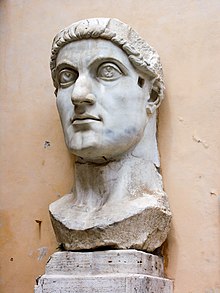
Religious experience is a good pointer to the existence of God! Discuss (40)

Religious experience, whether that is the general experience of living a religious life or specific, direct experiences of the divine, is very commonly cited as the basis for religious faith.  Nevertheless, William James and William Alston have both argued that although Religious Experiences are reasonably authoritative for the people who have them – and for those people may serve as more than a pointer to the existence of God – because of plausible non-religious explanations there can be no duty on other people to accept the authenticity of religious experiences or see them as pointers to anything supernatural. Richard Swinburne went further, noting that whether one accepts religious experiences as a good pointer to the existence of God will depend on one’s assessment of prior probability.  Responses to the claim “Religious experience is a good pointer to the existence of God!” depend to some extent on one’s own relationship with religious experience(s), whether one has had a direct experience or must rely on others’ reports, but depend mostly on one’s world-view.  Atheists and materialists are unlikely to accept the claim, even if they have had an experience that might otherwise be categorized as religious, whereas those who are open to the existence of God on other grounds are more likely to accept the claim, even on the strength of anecdote.

Direct religious experiences are notoriously difficult to define or categorise.  William James identified four marks that most experiences seem to have – transiency, a noetic quality, ineffability and passivity – and yet there are well-known experiences which do not have these marks.  Thomas Merton had relatively regular experiences over a long period.   Teresa of Avila’s experiences were sustained and seemingly the result of practices designed to provoke them.  Further the Religious canon is packed with descriptions of religious experience.  Other scholars have defined religious experiences in different ways.  Scholar of mysticism Rudolph Otto took a more general approach, saying only that authentic religious experiences are those of mysterium tremendum et fascinans.  In some ways Otto’s definition accords with Martin Buber’s description of religious experiences as I-thou encounters.  Walter Stace excluded classic visions and voices altogether and argued that genuine religious experiences are non-sensuous and mystical in character.  Richard Swinburne, on the other hand, listed five different types of religious experience in two categories, public and private, in an attempt to be inclusive. The difficulty in defining religious experiences is a seemingly insuperable obstacle to using them as the basis for an inductive argument for the existence of God.

Direct religious experiences are also open to alternative, non-religious explanations. Ludwig Feuerbach and Sigmund Freud both noted how religious belief tends towards wish-fulfilment.  Some religious experiences fit in most conveniently with the wants and needs of the person who has them and could be explained as creations of the subconscious mind. For example, Joan of Arc’s experiences fit in with the French nationalistic mood of the time and provided Joan with a credibility that she could never otherwise have had.  Might she have invented the experiences – or have interpreted them creatively – for her own (side’s) political advantage?  The Emperor Constantine’s vision before the battle of Milvian Bridge and the visions leading to the discovery of the True Cross on the First Crusade could be seen in similar terms. Alternatively, other religious experiences might be explained in physiological terms.  It is more common for those experiencing extreme physical stress or hormonal change to claim religious experiences – could the physiological changes associated with puberty or the suffering involved in a life-threatening illness be causing out-of-body sensations that are later interpreted as religious?  Julian of Norwich experienced visions while close to death, St Paul seems to have been an epileptic subject to grand-mal seizures and many other visionaries and mystics have exhibited physiological symptoms which might account for their altered state.  Of course it is difficult to disprove religious experiences in these ways – not least because an account of HOW the experience might have happened does not rule out God as the reason WHY it happened.  Nevertheless, the existence of non-religious explanations for religious experiences does undermine their status as a good pointer to the existence of God, both individually and otherwise.

Although Swinburne incorporated an argument from Religious Experience into his cumulative case for God, set out in “The Existence of God” (1991), he accepted that unlike accepting the natural observations that other inductive arguments start with, accepting religious experiences as even a pointer to the existence of God depends on prior probability.  People who already accept the possibility of God’s existence will accept that religious experiences are a feature of the world which require explanation while those with an atheistic world-view will reject religious experiences as delusions or at least claim that psychology and/or physiology explain away the phenomenon without any need to suggest a supernatural cause. It is fair to say that religious people, or at least those who are open-minded, will be more likely to accept that Religious experience is a good pointer to the existence of God than those who are committed to an atheist or materialist world-view and this suggests that there will always be disagreement on whether Religious Experiences constitute a good pointer to the existence of God that is little to do with the experiences themselves or what causes them.

Swinburne went on to argue that it is reasonable to accept reports of religious experiences – defined very broadly so as to include both public and private experiences – and to take them as pointers to the existence of God because of the principles of credulity and testimony.  In everyday life we believe what we see or experience ourselves and believe other people unless we have a good reason not to.  Why should these principles not apply to religious experiences?  Given the large number of people who claim to have had experiences that might be classed as religious experiences – around 1 in 3 people according to Alister Hardy Centre research – they need to be explained.  What reasonable grounds are there for dismissing either the occurrence of these experiences or the explanation proffered by those who have had them when we have no clear reason to doubt?  Nevertheless, Swinburne’s principles do little to advance his argument beyond prior probability.  Those with an atheistic or materialist world view are likely to respond to Swinburne by arguing that the very fact that somebody claims to have had a religious experience is evidence of their irrationality and good reason to be suspicious of their testimony. As Carl Sagan said “extraordinary claims require extraordinary evidence” – by their nature religious experiences are out of the ordinary and demand more rather than less evidence both to support their authenticity and their interpretation.

In conclusion, the claim “Religious experiences are good pointers to the existence of God” will only be accepted by those who are open to the existence of God on other grounds and is unlikely to persuade non-religious people of God’s existence. As Anthony Flew wrote in God and Philosophy (1966), responses to religious experiences… ‘seems to depend on the interests, background and expectations of those who have them rather than on anything separate and autonomous…” Take AJ Ayer’s conversion experience.  Even the medically documented experience of a committed atheist and expert Philosopher is explained away in physiological and psychological terms by those who see it as impossible. Ayer eventually denied his own experiences, attributing them to the effects of cerebral anoxia or shock, rather than change his prior assessment of probability.  In “The Blind Watchmaker” Richard Dawkins wrote that if he witnessed a marble statue waving its hand at him he would prefer to check himself into the nearest psychiatric hospital than accept that he had witnessed a miracle. What better demonstration can there be of the effects of prior probability on the likelihood of people accepting religious experiences as a good pointer to the existence of God?

Further Reading

Richard Gale on Swinburne’s Argument from Religious Experience


Irenaeus successfully defends God against charges of creating or allowing evil and suffering. Discuss (40)

The problem of evil and suffering continues to trouble all those with conventional Christian faith.  If God is, as Christian doctrine suggests, both omnipotent and omnibenevolent then why would evil and suffering exist within His creation?  David Hume pointed out an “inconsistent triad” of beliefs underpinning Christian faith and in the 1980s JL Mackie went so far as to call anyone basing faith on the propositions

  • P1: God exists and is omnipotent (and omniscient)
  • P2: God exists and is omnibenevolent
  • P3: Evil exists

“positively irrational.”  Because of this it is of the utmost importance for Christians – at least those with propositional faith – to address the problem of evil and suffering and defend God against the charge of creating or allowing either.  Such defences have traditionally been called theodicies, from the Greek words for God and defence.  One attracting attention in the past few decades is the Irenaean theodicy, as developed by John Hick and more recently by Richard Swinburne.  However, while the Irenaean theodicy might offer Christians ways of reconciling their faith with the real experience of suffering, Irenaeus’ original arguments offer little to the modern believer because they are unsuccessful in defending the concept of God that most Christians uphold

Back in the 2nd Century AD at a time of persecution and pogrom St Irenaeus was one of the first Christian writers to attempt a theodicy and explain why God would allow good people to suffer along with – and often more acutely than – sinners.  In Against Heresies, published around 186AD, Irenaeus argued that human beings were created by God in an infantile state and had to grow and develop through experiencing suffering, to fulfil their God-given natures.  In Book IV Chapter 38, Irenaeus explained how

“created things must be inferior to Him who created them, from the very fact of their later origin; for it was not possible for things recently created to have been uncreated.”

It seems that Irenaeus conceived of a God whose omnipotence does not include the ability to do what is logically impossible.  Atheist philosophers like JL Mackie would dispute this and ask why an all-powerful God could not create a world in which the laws of logic ran differently, especially if doing so would make the world a better place?  Of course, Irenaeus would not be alone in arguing that God could not create a world that is so substantially different from this one. St Augustine and St Thomas Aquinas would both agree that because God’s creation must have been single and simple and this world exists it follows that God would not have created multiple different types of world.  Further, if God is perfect it follows that God would only have created worlds of the best-possible type and as this world exists, this world must be of this type.  Nevertheless, the atheist objection to the supposed compatibility between God’s omnipotence and his being constrained by the laws of logic still seems persuasive.

Irenaeus continued by arguing that as mankind depends on God, human beings are contingent and necessarily less than perfect.  It is fair to say that this point betrays Irenaeus’ anthropomorphic understanding of God and His act of creation.  He wrote…

“Because, as these things are of later date, so are they infantile; so are they unaccustomed to, and unexercised in, perfect discipline.”

For Irenaeus, God’s creations are like God’s children and are affected by the type of imperfections that we know that children are affected by.  While this is appealing on one level, it is difficult to maintain the idea that the atrocious suffering of the 20th century could be justified as consequences from childish mistakes or opportunities to develop resilience.

To push the analogy that Irenaeus suggests, what sort of parent would allow the Holocaust to happen… whatever message it might send to their children about making sensible choices? Surely there are limits.  Irenaeus has difficulty in accounting for the extent of suffering in the world without supposing that inequalities in our experiences could be made right through the afterlife.  John Hick later develops this aspect of Irenaeus’ thinking, but even in his account it is difficult to accept that the appalling and apparently pointless suffering of a young child with an agonising cancer or animals undergoing vivisection can be justified as part of some lesson that God is trying to teach people. Any amount of heavenly bliss would be inadequate – if the person or animal in heaven remembered their former agonies then an eternity in heaven might be a continuance of their suffering and if their memories were erased then it is difficult to see how heaven could be any sort of mitigation for the unjust pointless suffering that individuals experience.  If a wrongly-convicted prisoner was told that somebody else would be compensated for their suffering – or that they would receive compensation only after they had advanced dementia and could not connect the compensation with the miscarriage of justice – they would hardly be satisfied.

Irenaeus argued…

For as it certainly is in the power of a mother to give strong food to her infant, [but she does not do so], as the child is not yet able to receive more substantial nourishment; so also it was possible for God Himself to have made man perfect from the first, but man could not receive this [perfection], being as yet an infant.”

The implication is that God could have created human beings perfect but chose not to because human beings could not cope with the weight of perfection.  This makes little sense.  If it was within God’s power to make man perfect from the start, should it not be within God’s power to create man with the capacity to receive perfection?  God is supposed to be omnipotent and not just like any human mother. Either God is as limited as anybody, in which case He is probably not worthy of worship, or God is culpable for the consequences of creating substandard human beings.

John Hick, in his “Evil and the God of Love” (1966) argued that Irenaeus’ writings offer the germ of a Theodicy which might satisfy modern Christians better than the traditional Augustinian Theodicy.  It might be argued that Hick’s development of Irenaeus’ ideas shows that they might offer a successful defence of God against charges of creating or allowing evil and suffering.  However, Hick’s “Irenaean Theodicy” draws on Origen and Schleiermacher as much as on Irenaeus and anyone who takes the trouble to read Against Heresies for themselves will see the distance between what Irenaeus argues and what Hick’s Irenaean Theodicy argues.   Irenaeus focusses on God’s justice and the idea that human beings deserve any amount of hell-fire and is far from being the gentle, comforting writer that Hick was.  For Irenaeus, life is less a “vale of soul making” than an annealing process, the human body being like iron quenched in fire and icy water to make it hard. In its original form, it is probably fair to say that Irenaeus’ Theodicy is at least as abhorrent as Augustine’s to the modern reader.

In conclusion, it seems that Irenaeus fails to defend God from charges of creating or allowing evil and suffering.  Firstly, unlike Augustine, Irenaeus leaves the nature of evil open and fails to head off the argument that God actively created evil.  Secondly, Irenaeus offers no convincing explanation for the inequality in our experience of suffering or for its pointless and unjustifiable extremes.  John Hick had a good go at reawakening interest in Irenaeus, but that interest is unlikely to survive the process of going beyond Hick’s account of Irenaeus to the original work.

Further Reading

Irenaeus: Against Heresies (New Advent)


Making sense of the new A Level

I have been reflecting on how best to plan and deliver the new A Level in Religious Studies for a long time!  Having explored several different options through my own planning and teaching and through preparations that I have made for delivering teacher training on the new specifications, I think I now have the answer.  🙂

I have concluded that the only way to get through the increased content is to ignore the way in which the exam boards divide it up into topics and even papers and to use it as the ingredients of a story which will make sense of the course as you deliver it, whether that is all through one teacher, through two or three.

Here is a draft outline of how I can see this working out, based on the assumption that you have two teachers, about four hours’ teaching per week and that you would like to hang on to the notional division between “The Philosophy of Religion” and “Ethics”…  This outline is, by the way, based on the OCR content, although I can see that you could do something similar with content from other specifications.

Philosophy of Religion
The Year 12 course will begin with an exploration of how human beings have knowledge of God.  Revealed Knowledge of God will be considered first, with a particular focus on Religious Experience both in terms of what it consists in and what it reveals.  Students will then consider the difficulties with relying on revelation for knowledge of God, including physiological and psychological explanations for mystical experiences and sociological explanations for corporate religious experiences.  Just before October half-term, a link will be made across the course to Ethics, considering the difficulty in basing religious beliefs and doctrines on revealed texts. 
After October half-term, the course will move on to consider reason as a way to develop knowledge of God.  Students will consider Aristotle’s approach to Philosophy, providing context for Aquinas’ ways to God.  They will study the Cosmological Argument and then the Teleological Argument, in each case considering later developments of the arguments and evaluating the success of the arguments individually. 
After Christmas students will explore the philosophical approach of Plato before moving on to explore the Ontological Argument from Anselm (and Descartes).  Criticisms of the Ontological argument from Gaunilo, Kant (and Aquinas) lead into broader evaluation of the idea that human beings have innate knowledge of God in the weeks leading up to examinations, with reference to Calvin’s Institutes, Anselm’s Proslogion, Aquinas Summa 1:2:1 and Biblical Texts such as Romans 1:18-21 and Acts 17:16-34.  Revision will draw together the exploration of how human beings develop knowledge of God – through revelation, reason and through innate knowledge. 
  • A synoptic question concerning the point of arguing for God will be part of the April internal school examination, along with a more straightforward question on an argument for God’s existence.
The Summer Term will explore challenges to Religious belief.  Starting with the challenges from Secularism (and Science) we will move on to explore the problem of evil and suffering in depth, considering St.  Augustine’s response as a particular focus, including Augustine’s teaching on the Fall, Original Sin and God’s Grace from the Christianity module.  Summer readings will be from John Hick’s Evil and the God of Love and Augustine’s Confessions.
The Year 13 Course will begin with an exploration of Christian beliefs about Death and the Afterlife (from the Christianity module), including consideration of Philosophical perspectives on the relationship between soul and body.  This will provide an opportunity to revise Plato and Aristotle and Descartes as well as to draw together the topic of challenges to religious belief.
After Half Term students will go on to study the nature and attributes of God (including a LINK with the Gender and Theology topic 5 from the Christianity Module), considering the implications of beliefs about death and the afterlife for concepts of God and the different models of God supported by arguments for God’s existence and by revelation.  The impact of the different concepts of God will be considered before the topic of Religious Language is started just before Christmas.  Holiday reading will focus on Religious Language.
In January, after mocks, students will explore different approaches to Religious Language, starting with Medieval approaches to symbol and univocal language, the via negativa and equivocal approach to language and Aquinas’ doctrine of analogy.  This will provide an opportunity to revise Aquinas’ ways to God and Anselm’s Ontological Argument and criticisms as well as to make connections with the nature and attributes of God just covered.  In February students will explore 20th Century developments of the Religious Language debate, including Logical Positivism, Verification and Falsification and Wittgenstein’s Language Games. 
After February Half-Term, the course will conclude with an exploration of the issues caused by Religious pluralism for Theology and for Society.  Insights from across the topics of Religious Language, the Nature and Attributes of God, Death and the Afterlife and the Problem of Evil will be brought to bear in considering the truth-claims in Christianity, whether they are exclusive or whether inclusivism or pluralist approaches are plausible.  The Church’s response to Pluralism, and to other challenges such as Secularism and the view that religion should play no part in schools or public life (Secularism, topic 6 from Christianity Module), will be the final topic of the course before formal revision begins after Easter.
 
 
Religious Ethics
The Year 12 course will begin with an exploration of the person of Jesus (from topic 2 of the Christianity module) and will move into an analysis of Christian Moral Principles (topic 3 from Christianity module) including and how these might guide moral action (through Divine Command Ethics).  In October, students will move on to study Situation Ethics as proposed by both Dietrich Bonhoeffer (explored in detail as a case-study for Christian Moral Action, topic 3 of the Christianity module) and Joseph Fletcher.  The course will move on to consider the weaknesses of Situation Ethics, particularly in relation to Euthanasia. 
After half term Natural Law will be considered as an alternative – starting with its origins in Aristotle and in Romans 1:18-21, the course will consider Aquinas’ development of Natural Law as a Christian approach to decision making, evaluating it with particular reference to the issue of Euthanasia.  The term will conclude with a consideration of the question “how do Christians make moral decisions” drawing out the diversity in approaches – including Biblical Divine-Command Theory, the Bible, Church and Reason or simply agape. Links will be made with Philosophy of Religion in relation to Aristotle’s approach to Philosophy and the concept of telos/teleology.
In January, the course will move on to consider non-religious approaches to ethical decision making.  Utilitarianism will be explored first, comparing and contrasting the approaches of Bentham, Mill and Singer to/with Christian approaches.  In February students will start to consider the ideas of Immanuel Kant, exploring his concepts of duty, good will and his categorical imperative and what they suggest about decision making. 
  • The April school examination will offer a choice of two questions, one on Christian Ethical responses to Euthanasia and one asking students to compare the merits of Kant and Utilitarianism.
The Summer Term will open with a 3 week exploration of Business Ethics, considering how Utilitarianism and Kantian Ethics would cope with questions arising (and if Christianity offers useful guidance).  The course will proceed to an exploration of Gender and Society (topic 5 from the Christianity module).  This will provide an opportunity to revise early work on the person of Jesus and pick up the story of the early Church, considering the role of female disciples and early-church leaders as well as Paul’s teaching on Sex, women and the family and the contribution of St Augustine (Link to Philosophy of Religion, Original Sin).  The year will end with a brief look at Feminism within and outside the Church.
After spending the first three weeks of Year 13 on Gender and Theology, the course will turn to Sexual Ethics; the perspectives of all the ethical approaches studied through Year 12 will be considered and revised as they are applied to a new applied issue. 
After October Half-Term students will begin to study theological and psychological ideas about the conscience (including a focus on the ideas of Feuerbach, Freud and Dawkins about religion as wish-fulfilment from topic 6 Secularism on the Christianity module).  Lessons will pick up and revise ideas covered in the topics of Gender and Sex as well as considering the role of conscience (howsoever defined)  in Christian decision making.  An obvious opportunity to revise early work on Situation Ethics, particularly Bonhoeffer, exists here – as well as the change to tie in Aquinas’ teaching on Conscience with his Natural Law theory and note the influence of Aristotle on both. 
In January, after mocks, students will go on to study Liberation Theology and Marx, picking up on the opportunities to revise early work on the person of Jesus, Christian Moral Principles and Christian Moral Action.  The implications of Marxism as a challenge to religious belief will be considered before the use of Marxism by Liberation Theologians is considered.
In February, the final topic will be Meta-Ethics… picking up the link with Religious Language and looking back through all the work done to ask questions about the meaning of Ethical terminology and the plausibility of Ethical Language.  Formal Revision will commence after February half-term.


Teaching Philosophy of Religion for the new RS Specifications

The new OCR specification for GCE A Level Religious Studies seems to me to be the most user-friendly of those currently on offer.  With its clear assessment strategy (3 2-hour examinations, each having a choice of 3 out of 4 one-part essays) and its more integrated approach to topic selection, it seems likely to be the most popular choice amongst departments that have hitherto focused on the Philosophy of Religion and Ethics.

That said, the new specification is still a long way from the old OCR specification – let alone from legacy RS specifications offered by WJEC or AQA for examples.  The amount of content has increased exponentially and both the grade descriptors and the specimen mark-schemes suggest that the level of response expected for high grades will be higher than the old A2.

This leaves teachers in a difficult position; preparing students to write critically evaluative essays which engage with an “extensive” number of scholarly arguments takes a good deal of time, yet delivering what seems to be more than 50% extra content takes a good deal of time as well.  No more time is available, so teachers will have to choose EITHER to cover all the specified topics OR to prepare students to understand, analyze and evaluate it properly.

Particularly where larger and mixed-ability classes exist, a focus on content to the exclusion of much discussion or reflection or essay-practice seems more likely.  The pressure to “just get through” all the material specified is intense – where those topics are familiar teachers are finding that they cannot use resources and activities they have relied on previously, both because they take too much time and because they explore topics holistically when new specifications take an odd, seemingly illogical and definitely selective approach to squeezing what have been major topics into fewer specification- inches.

Take OCR’s coverage of the Ontological Argument for just one example.  In the headline content Anselm, Gaunilo and Kant remain but Descartes and Leibniz – the scholars Kant was responding to – have gone.  Russell and all 20th Century proponents and critics of the argument.  Having said that, the suggested scholarly views (theoretically not compulsory) include Van Inwagen and Plantinga, both of whose arguments engage with points of the argument seemingly beyond the scope of the content and key knowledge specified.

Teachers will wonder: do OCR want teachers to teach beyond the level that the old A Level required, really engaging with these texts from Van Inwagen and Plantinga (so familiar to me from MA reading lists) and pushing bright students to grapple with articles and arguments partly written in modal logic… or is the actual intention to streamline this topic, taking account of the increased content of the A Level overall… in which case it seems that the “suggested scholarly views” have been selected with little thought or sense.

From what I have experienced and heard, OCR’s training has not been particularly illuminating on this or on other similar points.  Certainly, little sample student work has been available from which teachers might gain an understanding of what the levels will look like in reality.

That said, this post is not intended to criticize OCR.  As I said earlier – their specification seems to me to be the best of the bunch.  Further, it is obvious that their team has been working under unreasonable amounts of pressure for many months – pressure emanating from unrealistic DfE deadlines that are well beyond their control.  The problems affect all boards… it is just that I have best knowledge of the OCR specification, because I am teaching it.

In the past few weeks, I have been preparing the resources for Candle Conferences’ “Starting A Level Religious Studies” alongside preparing and teaching my own lessons.  From my conversations with teachers of other specifications, and from my own analysis of those specifications, accompanying SAMS and other materials, I can see that the result of the new specifications seems likely to be several cohorts of students ending up with a poor understanding of the subject and being less able to write high quality critical essays independently.

This cannot but affect the subject’s ability to recruit and retain students, even if – as many colleagues are speculating – the boards end up interpreting the ambitious level descriptors generously and lowering grade-boundaries to prevent grades falling off a cliff-edge and innocent students’ life-chances being damaged by the mess. 

Certainly I have heard reports of smaller A Level numbers from across the country, including a few anecdotes about options being withdrawn and teachers being made redundant.  The general financially motivated reduction from 4 to 3 options from the beginning of Year 12 has been partially responsible to be sure – but the chaotic implementation of qualifications reforms is a factor… and will be more and more of a factor in the coming years as the effects of declining and/or unpredictable results combine with the perception that RS is all about learning model-essay-answers and memorizing lists of facts and quotes rather than about having any meaningful discussion or debate, let alone about developing outstanding skills in critical analysis.

Surely it cannot be acceptable that the DfE has caused levels of subject-understanding and skills in independent analysis and evaluation to decline, student learning experiences to become poorer and departments to waste away under the pretext of raising standards and re-introducing academic rigour.  

I am the first to admit that the old A Level had been dumbed down and that there was a genuine need for more content and higher expectations  – our events and resources were all designed to push students well beyond existing demands – and yet it seems that rather than “tweaking to transform” Religious Studies the DfE has all-but obliterated what was good about the subject and has put its future in both schools and UK universities in jeopardy.  If that was the original intention – which was officially denied during my meeting with the DfE in December 2014 – then the DfE looks likely to do what it set out to do.  Otherwise this is yet another example of an epic failure on the part of the Department and the Government.

The New Gnosticism

“It’s the end of the world as we know it and I feel… not so fine”

Listening to The Now Show on Radio 4 days before the US Election really got me thinking.  As they blasted through their take on REM’s earworm, it struck home to me that I don’t feel fine about what will happen on Tuesday… or about what is happening more generally for that matter.

Twitter is full of politicians, journalists and Alastair Campbell drawing comparisons with the rise of the 3rd Reich and these might well be valid, but as an RE Teacher it occurred to me that Church History might offer a better comparison.   What we are experiencing is not so-much POST TRUTH POLITICS but rather the result of a modern form of Gnosticism, ordinary people being convinced that they posses the truth and that it will liberate them.

//platform.twitter.com/widgets.js

Putting this in context, as I see it the rise of Trump in the USA, Brexit and the resurgence of the right in the UK, the Front National in France [and I could go on, and on…] is all the result of a general distrust of authority that is borne out of the gross inequality, resentment and alienation caused by globalisation since the end of the Cold War.

Through the 1990s, following on from the fall of the iron curtain, representatives of the government, the Church, academia, the police, celebrities, royalty etc were “discovered” to have abused their positions, usually in a humiliating way.

  • The Clinton scandal was the culmination of this process, which also involved Tory sleaze in the UK, worldwide Catholic child abuse scandals, academic scandals such as that involving Norman Stone etc.

The abuse of authority was not new, but without the excuse of being on a war-footing against Communism, there was less to constrain the media in exposing it… and the public – poor and resentful and without hope in the post Thatcher, post Reagan boom and bust world – lapped up these stories and provided a massive financial incentive for newspapers to rake up more and more of them.

With its huge public influence, those in authority sucked up to the traditional media, hoping that they could use its power for their own ends, but the public interest in stories about humiliating authority figures was always greater than its interest in any other kind of story.  Understandable perhaps, given peoples’ growing sense of dis-empowerment and rage at representatives of a “system” which perpetuated inequality. Naturally enough, acting “in the public interest” transmogrified into serving the public’s baser desires to get even and vindicate their own inadequacy.

Newspapers crossed line after line in pursuing lucrative stories, including paying ordinary people for information – or misinformation – that could bring down powerful people.  Peoples’ “secret knowledge”, things that only they and their circle knew, became valuable and provided the means by which they could be plucked from obscurity and earn the immortality of fame.

By 1997 the feeling that every one of us has the power to bring down anybody we envy or dislike was widespread.  Teachers, Vicars and Politicians, once shielded by their authority, were now subjected to a hail of accusations, deserved and otherwise.  The charismatic President  of the USA was brought down on the say-so of an intern and nothing could save him from having details of his anatomy discussed on chat-shows.  Ordinary people developed a sense of superiority which made them willing to continue as they were and removed all desire to change the “system”.

Alienation, frustration and economic subjugation became tolerable and even desirable when one labours under the delusion that each one of us has enormous power should we choose to exercise it.  Why did Christianity attract Constantine and later Roman Emperors?  Because it’s promise of salvation and eternal life gave ordinary people hope, made them compliant and even willing to fight to support the system that kept them ordinary.  Today, so long as a few idiots test their power and bring down a succession of authority figures, there is no need and no incentive for the rest of us to do so, just believing we could is enough to make us tacitly support the status quo.

Another effect of peoples’ belief in their own secret power and their suspicion of authority was to make people more complacent and less ambitious.  People stopped aspiring to better themselves through education and earning traditional positions of authority.  Why would anybody choose to learn, be successful or exercise authority when success and authority always carries with it the threat of the pillory?  The only sort of aspiration left was to anonymous wealth through gaining a position which carries no authority or public profile but which is remunerated on a level which would facilitate escape to live in a tax haven.

Through the Millennium productivity and political engagement went down and down and reality TV was born, offering a different kind of fuel for the delusion that we all posses a secret something which could redeem us one day.  The idea of public service died as the middle classes refocused the aspirations of their offspring away from the Houses of Parliament, academia or the Church and towards the Hedge Funds. The attempt to bring down the bankers after the crash of 2008 showed people rushing to slam the door after the horse had bolted, pouring out impotent rage against the middle classes who stubbornly refused to step up and assume their now traditional role of authority-figure-to-be-ritually-disgraced.

In the economic doldrums and in the absence of sufficient numbers of other suitable authority-figures to bring down (very few people exercised any authority at all by this time) in 2010 the authority of the traditional media became its own focus!

  • On one level demand for more and more salacious stories drove news online and online news outlets, desperate for clickbait, were more open to the attempts of politicians to get even with the press-barons by giving them a taste of their own medicine.
  • But, on another level, the newspapers were SO desperate to replicate the success they had had in bringing down authority-figure after authority-figure over two decades that they could not resist reprising their role, even when the authority-figure was themselves this time round.

Leveson and successive attempts at press-regulation ushered in the demise of the traditional media and opened the door to a world in which every desire can be instantly gratified  online… let’s call it news porn, the ability to feel better about oneself by accessing stories which humiliate more successful people at the click of a button.  Twitter, Reddit and Buzzfeed are like the cults which once offered the initiated secret knowledge which made their present condition bearable and filled them with non-specific hope.

It seems to me that the root causes of our present condition are inequality and alienation on the one hand and false hope on the other.  If we could address inequality and give people a prosperous future that would be wonderful – but globalisation has run out of all control and the disastrous consequences of Climate Change and AI are on the horizon.  Destroying false hopes seems the only realistic way forward and this involves helping people to see the situation that they are in more clearly.

  • Don’t people realise that we are in a world where politicians see that their best route to power is dancing the cha-cha-cha badly in spandex on prime time TV, being caught in a parenting lapse or photographed stuck on a zip-wire?
  • Are we so eaten up by envy and resentment that we only reward people who willingly submit to humiliation with power, caring nothing for their qualifications to exercise it?
  • Are we so naive that we can’t see that these stories are being manufactured by clever PR people to play on our obvious susceptibilities?

If we do nothing the world will surely be vulnerable to a new Constantine, a megalomaniac who will seek to unify and harness the false hopes of the masses by establishing an orthodoxy that will support him in exercising a new form of authority.  This is not POST TRUTH POLITICS but a politics which really understands the importance of controlling, creating the truth.  NB: To call it post-truth suggests that there is or has been, a standard of truth that is generally accessible and that is independent of how people choose to see things… something that I doubt.

The experience of the Early Church might suggest that he will…

1) build monuments that glorify randoms who have been dragged from obscurity to immortality by redemptive acts of “truth-telling” i.e. humiliating authority figures.  I wonder how long it will be before Trump offers Edward Snowden a pardon and facilitates Julian Assange’s release while re-writing the history of what they actually did – that they embarrassed Clinton will surely be enough to make them heroes in the new regime?

2)  develop and perpetuate martyr myths, the gorier the better.

3) establish dogmas which require people to publicly confess assent to impossible contradictions as a mark of membership. Pillory (or kill) anyone who refuses to accept these dogmas.  Refuse access to education or professional employment to anybody who has not publicly assented to these dogmas.  In practical terms, I think that Trump will find the answer to college access in the US will be philanthropic scholarships which will offer free access to higher education, including online higher education, for his supporters.

4) create impossible aspirations in women and set them off on quixotic quests to achieve the impossible in their own lives and bodies.  This should keep them quiet for a couple of thousand years, so long as the supply of peculiar clothing etc is uninterrupted and education remains poor.  It will also keep them out of education and proper employment, as there will not be time to maintain aspirational lifestyle AND study or pursue a career.  With women (and children) dependent on men, men will be easier to manipulate as well.

5)  preach “crusades” against groups who are different, calling on people to sacrifice and die for the cause and promising them immortality in return.

If ever there was a case for saying that studying Theology is relevant to the modern world, this is it.  Its value, to my mind, lies not so much in giving young people the opportunity to learn about peoples’ religious beliefs and practices today as in giving them a context for understanding the history and politics and culture of our time, the perspective that we need if we are to engage critically and intellectually and exercise the only sort of freedom that is possible.

No wonder that public policy is set to remove opportunities to study Theology in any meaningful way!

GCSE RS Musings…

Perhaps because our Shell (Year 9) Options Evening was last Friday, I have been thinking a lot about the new GCSE specs since Christmas.

After reading through the draft specifications and keeping track of the progress they are making with Ofqual, I decided that eduqas would be the most likely candidate to be our awarding body from September 2016.

The fact eduqas will let us co-teach short course and full course GCSE with Buddhism as our second religion option was the major factor in this decision, but I also liked the SAMs eduqas produced and the attitude that their team has displayed throughout the “reform” process.   Eduqas genuinely seem to understand the subject and the challenge of teaching it and to want to help in whatever ways that they can, not least by being the first to re-submit their drafts and thus standing the best chance of early accreditation.

AQA is my second choice at the moment, largely because it is a known quantity.  We currently do AQA Specification B and have been very happy with it – but the new draft specifications from AQA, for all the choice that they allow, would limit me to teaching Islam or Judaism as my second religion because of our need to offer Short Course alongside the Full Course.  Further, I fear that the choice in themes that makes AQA attractive could prove their undoing with Ofqual; the demanded level of exemplification for the religious views on eduqas’ four themes took their specification from 19 pages to 80+ and it might still get longer so AQA might end having to get something like a telephone directory passed line by line.

I attended the eduqas “preparing to teach” day in London today and am preparing to make a final choice once Ofqual publish feedback in mid February.   However, I have been struck by a few things…

1) As I suggested in November during the consultation process, AO2 has morphed into describing and explaining different views. The emphasis on forming a reasoned judgement has almost completely gone as have skills in developing written argument which was a big marketing point for GCSE RS in the past.
2) The content (common to all boards) is much, much bigger than present specifications and more detail will be required in terms of quoting from and interpreting scripture.
3) The new specs are likely to stretch and challenge the middle achievers, but possibly inhibit the high achievers and prove completely inaccessible to the low achievers. Boards are trying to reduce this impact by structuring questions and mark schemes to guarantee the weakest student a few marks, but it will still be difficult to keep bottom (and top) motivated during the content trawl.
4) Christianity content for GCSE (and ALevel) seems much more conceptually and textually demanding than for other religions. Discussion today of whether choosing Christianity could disadvantage students as a result.
5) Resources look scarce, inflexible and extremely expensive, especially if you plan on taking Indic Religions. First release texts focus on Christianity, Judaism & Islam. Huge amount of planning to do & much room to make omissions or misjudge level of detail required.  

Try looking for books to teach GCSE Buddhism on Amazon and you will see what I mean about resources – most are out of print or not yet published – even those recommended by the trainers today are “currently unavailable” and there are no plans to fill this gap in the market.  The boards claim the gap is too small to be commercially viable – but the lack of resources will ensure that, so it is a self-fulfilling prophecy.  

My pick of what is currently available (and affordable in relation to just 25% of the GCSE) is Clive Erriker’s paperback from the “Teach Yourself” series – but it will demand a lot of Year 10s!  I hope to use this as a text for students to have at home to support homework, revision etc. and to use a combination of other resources in class. Who knows, maybe weaning them onto a text without pictures in Year 10 will be a good bridge to A level?  Fingers crossed.

Anyway, I would be interested to hear your thoughts if anybody felt like responding to this post…


Eduqas A Level… Preparing to Teach?

Just back from the eduqas “preparing to teach” A Level INSET in London, aimed at introducing and marketing their 2016 specification.  In the half-hour I have before running a discussion with our Philosophy Society “Sophos” about Confucianism and its relevance in understanding modern China (!) I will share some of my impressions.

  1. Religious Ethics

This session held no surprises and for experienced teachers should not throw up any problems.  The only novelties were the insistence on teaching modern versions of ethical theories e.g. Singer, Ross, Finnis – this is required by other boards at the moment though, so no chance for those converting to eduqas.   The one thing I would say is that the materials and the presenter seemed, as yet, a bit hazy on the details of this new content.  I hope that the examiners have a better grasp of the actual subject content they will be marking before June 2017/18!

The presenter was under the impression that none of us had taught ethics before, when most were very experienced heads of department, so this was slightly annoying.  Nevertheless, I came away reassured that I would be teaching to the top of the expected range (and would have to be careful not to expect too much – of the examiners, if not the students).

Interestingly, AS will not require students to refer to scholars at all, even to get the top band, but the full A Level will – and to many scholars at that.  This presents a challenge to anybody considering co-teaching.

2. Philosophy of Religion

Presented by Gordon Reid, who will be heading up the AS Philosophy of Religion team for eduqas, again the session held few surprises.  Nothing surprising about the content – Teleological, Cosmological, Evil, Atheism, Religious Experience at AS with the addition of Ontological and Religious Language at A Level (plus a lot of scholars and detail)…

The big ask at A Level will be students writing for an hour on what might be very focussed questions and getting 60% of their marks for evaluation.  The new AS – 45 minutes per question and 50/50 split between knowledge and evaluation is more like the current A Level.  Gordon  Reid was helpful in clarifying command words at AS and A – Outline/Explain and Assess the view that at AS, Examine and Critically Evaluate at A Level.  The key for both levels will be ensuring that candidates give reasons on both sides of the argument and come to a properly reasoned conclusion.

The big change in the Philosophy (and Ethics) papers is the clarification that there will be a compulsory theme on each AS and A Level paper, offering students a choice of two structured questions, as well as 3 questions on the remaining three themes.  This is driven by OfQual and prevents centres from being selective about teaching and not teaching topics, as Draft 1 implied.

3. Christianity

The vast majority of delegates attended the Christianity sessions as their third option today – probably in excess of 60 out of 80 people at a guesstimate. The explanation given of the Christianity specification was excellent – their new Principal Examiner in this area (Acting) was clear, knowledgeable and treated her audience as the grown-ups they are.  She had a difficult job though. The specification is vast and complicated and there will be precisely zero appropriate textbook resources to use until 2017 at the earliest.

One thing that did strike me is the possibility of dividing up the Christianity unit into

  1. An pacy introduction to the whole course like the old “Foundations for the Study of Religion” paper that OCR used to do (Jesus, Development of Early Church, Concept of God, use and authority of the Bible, divisions in the Church today)
  2. A range of discrete topics embedded in the Philosophy of Religion and Ethics respectively – e.g. Just War from the Christianity unit being taught with applied ethics and Natural Law in the Ethics unit, Baptism, Original Sin and Atonement being taught within the Problem of Evil section of the Philosophy of Religion course.
  3. A conclusion to the whole course exploring the state of Christianity today – rise of secularism, liberation theology, prosperity theology etc.

I will think about it anyway!

As an aside, I do wish that eduqas would offer a text paper as competition to Edexcel.  Nice an simple – John’s Gospel with comparisons to other Gospels as and where necessary would be good. This would offer a rigorous alternative to what is otherwise a spec likely to be dominated by lightweight comparative religions approach to our subject and would certainly be in order given the claimed justifications for the “reforms” given by the DfE 18 months ago.

RE for REal… or what’s in a name?

Last week the “RE for REal” report was launched and attracted some comment in the press… comment which merged with that generated by the High Court’s ruling that Nicky Morgan’s justification for the exclusion of Humanism from the new GCSE Religious Studies was based on an error of law and by the British Humanist Association‘s attempts to convince people that that meant that the new GCSE would have to be re-written to include Humanism.

The politicisation of teaching about Religion and belief in schools has reached fever-pitch and threatens to destroy what is left of the subject, when schools are pushed to the very limits by real terms cuts, a corrosive culture of blame and a tsunami of paperwork generated by the well-meaning initiatives of politicians whose knowledge of ordinary schools is either limited to their own experience in the 1970s or totally non-existent.

Religious Education is not protected by the National Curriculum or clear standards in OfSTED inspection.  The Religious Studies GCSE is not part of the so-called English Baccalaureate (and has no prospect of becoming part of it either), the A Level is not a so-called Facilitating Subject, trained teachers are in short supply and so (as OfSTED confirmed) the quality of teaching is often questionable.  Even experts disagree about the purpose of Religious Education and Religious Studies in schools and confusion about what should be happening in the classroom is apparent from the huge variety of different names that teachers have given to their subject, whether that might be to disguise what it is that they are caught up in and hide it from students, parents, colleagues or even themselves… or to impose their own agenda on what might otherwise be blank space on the timetable.

It is no use denying that teaching about Religion and belief is in an extremely vulnerable position and is likely to be shunted out of the curriculum at KS4 and KS5 and then, in time, at KS3…

perhaps to be replaced by the odd collapsed curriculum day, visiting speaker or trip to a museum coordinated by a harassed Geography teacher?

It seems a tragedy that many young peoples’ opportunities to reflect on some of the biggest questions that affect humanity, opportunities which can be right at the heart of quality education, might disappear because of poisonous competition between vested-interest-groups and the desire to meet fleeting financial targets.

So, (how) can we get out of this mess?

The RE for REal report makes some very sensible suggestions but I can’t see that (even in the unlikely event that the DfE adopted the report, implemented and funded its recommendations) we would see a big improvement in the situation in schools.  The one glimmer of hope that I see in the report is Recommendation 7

“GCSE Religious Studies should remain as an optional subject for schools, and consideration should be given to clearly demarcating the boundary between academic study of the real religious landscape, and other religion and belief learning associated with citizenship and SMSC (spiritual, moral, social and cultural development) outside of the GCSE.”

There are hints of this issue in others of the recommendations, and

I wish that the authors of the report had recognised that it is the confusion over the purpose of the subject in schools which needs sorting out before the content of each Key Stage or the constitution of the panel who might decide it.  

To me it seems obvious that there are two distinct subjects being taught in our curriculum.

  • RELIGIOUS EDUCATION is mandated and protected by statute, must reflect the make-up of the population – whether locally or nationally – and aims to increase religious literacy, tolerance and cross-community engagement in British society.
  • RELIGIOUS STUDIES is an optional academic subject which prepares students to embark on undergraduate courses in subjects related to Theology and Religious Studies and aims to build the critical skills that prospective Arts or Humanities undergraduates will need to earn their II(i).

While both RE and RS involve teaching about Religion, their aims and approaches are different and arguably, to some extent, incompatible.  

For a few examples…

  1. The depth that is required for meaningful RS pulls against the breadth that is required to do justice to the aims of RE.
  2. The focus on quantities of factual knowledge about multiple religious traditions in RE can pull against the need to build skills in critical evaluation – and question the very nature of “factual knowledge” – in RS.
  3. The need for critical engagement in RS can pull against the need to promote tolerance of unreasoned belief in RE.

To use an analogy… (like RE) Citizenship is compulsory (at least in theory), but nobody would doubt that it is very different from A Level Politics, let alone A Level History.  One is designed to ensure that young people understand “British Values”, how to vote and how the police work in their area while the other demands academic engagement with political theory and the critical evaluation of different hypotheses concerning the relationship between political actions and events.  People wouldn’t take kindly to a partisan DfE determining the content of Politics or History in order to promote its own political agenda – we have seen the outcry generated by relatively minor changes to A Level Politics recently, or when Gove suggested reinstating “Our Island Story” as a GCSE text in History!

Why do people just accept the DfE rewriting GCSE and A Level Religious Studies in consultation with religious groups and experts in Religious Education whose experience is predominantly with KS2&3 – while completely excluding academic Theologians and teachers who specialise in teaching academic Religious Studies in the 14-19 age-range?  Some of those who were consulted by the DfE showed how out of touch they are by talking about how GCSE RE would change – when it does not and has never existed – and sadly, this terminology started to be adopted in the press only adding to the confusion.

As I have suggested before, I think that real improvement in the situation would be signalled by the recognition that GCSE and A Level Religious Studies have little to do with fulfilling a school’s statutory obligations to provide Religious Education.  

The authors of RE for REal are absolutely right that we need clarity in terms of the law and how it should be interpreted.  It needs to be understood, for once and for all, that an optional GCSE (and A Level) course in Religious Studies cannot be understood to fulfil statutory obligations to provide Religious Education to all students in full-time education.  Either the law needs to change so that the obligation ceases at age 14 or provision for RE in the 14-19 bracket needs to be made through the core curriculum, alongside PSHCE perhaps.

Certainly, this clarity would trigger a dramatic decline in numbers sitting GCSE Religious Studies (and to some extent A Level Religious Studies) examinations – but it would mean that we could restore academic rigour and relevance to HE TRS courses to the examination specifications, which would remove the hobble that has been the compulsory focus on a very minority area of study at HE level which students are not particularly interested in to the exclusion of richer and more engaging aspects of the subject-area which lend themselves to building the requisite skills for higher level academic study.

It might be that changing the name of one, or both, of Religious Education and Religious Studies would help to make the point that they are not synonyms, but we cannot assume that a name-change will do the job on its own.  

In the 1970s schools changed from Divinity, Scripture Knowledge or Religious Instruction to Religious Education… and soon after the government caught up in 1988 they pushed to change again to Philosophy and Ethics. Nevertheless, the problem did not go away.

“What’s in a name? A rose by any other name would smell as sweet…”

Romeo and Juliet (Act II, Scene ii)

As I see it, we need to think more deeply and well about the nature and purpose our subject and not get distracted by names, the constitution of national panels, lists of facts that will probably be ignored or fanciful requirements to study cutting-edge theory and data that 90% of teachers have no knowledge or understanding of themselves.

Qualifications Reform

This term every RS and Philosophy teacher in the land is preoccupied with qualifications reform.  Boring yes, but important none the less.  The choices are difficult and not a little confusing.

Firstly, the A Level Philosophy of Religion and Ethics has gone for good.  As the DfE content criteria and the draft specifications affirm, what remains in Religious Studies A Level is “philos’n’ethics lite” with a side order of either the systematic study of religion (almost everybody will do the chips choice that is Christianity) or the vegan alternative that is New Testament study… virtuous maybe, but only for the idealistic few in reality. All options to study the Old Testament, Christian Doctrine, Religion and Art, Science and Religion and Church History have disappeared without so much as a by-your-leave.

Secondly, the AQA Philosophy specification that many people have looked to as a “one-day-maybe” alternative to Philosophy and Ethics (RS) has also been “reformed” and not for the better.  Gone is the choice and the lovely set-text paper and in has come short-answer questions, a perversely dry offer of Philosophy of Religion (compulsory, AS, 25%) and Ethics (compulsory, A2, 25%) accompanied by serious Epistemology (compulsory, AS, 25%) and challenging Philosophy of Mind (compulsory, A2, 25%).  The consultation on the future of Philosophy has just closed, but it looks like the controversial AQA 2015 spec has been taken as the “form” of A level qualifications in the subject in general… even if OCR or EdExcel decided to commit the commercial suicide of offering an A Level to compete with AQA it would have to be its twin and could not survive by scooping up the many disillusioned Philosophy teachers that I am sure you have met on the INSET circuit, looking to switch to RS.

The alternatives for most departments end there, so we should probably move on to a discussion of AQA (looks appealing, but beware of the small-print), and the slow disappointments that are both EdExcel and OCR… but I want to draw your attention to another option which does still exist, although it is obviously not for everybody.

The Cambridge Pre U Philosophy and Theology started off around 10 years ago as the pet-project of colleagues who call half-term “reading week” and think nothing of issuing multi-page reading lists peppered with foreign-language texts to those brave enough to select Divinity as a Sixth Form option.  The first draft that I saw as a new head of department in a selective London day-school scared me senseless. Set texts for the Philosophy of Religion included Aquinas’ Summa Theologica – full stop, no parts, sections or questions detailed…  The Pre U has joined the real world in the years since however and now offers a rigorous course which is also accessible to the many, not just the chosen few.

Examining it now (for those of use with sufficient grey hair) the Cambridge Pre U specification has eerie resonances of OCR A Level c.1999.  An introductory Paper 1 explores themes across Philosophy and Theology, ranging from Epistemology to the Philosophy of Language and the Philosophy of Mind – but all are cleverly selected to support the study of the Philosophy of Religion and Ethics with topics like conscience, free-will and determinism, verificationism, rationalism vs. empiricism.  The setting examiners (John Frye maybe?) clearly expect most schools to choose Philosophy of Religion and Ethics.  The Philosophy of Religion and Religious Ethics content is familiar, exciting and more shades of OCR – all the Arguments, Religious Experience, Life after Death, Evil and Science, Religious Ethics, Kant, Utilitarianism, Virtue Ethics and five meaty applied issues.  Rigour, coherence and real experience of teaching shout out from the specification when compared with any of the new A Levels in RS.

You can mix it up as well – substitute Religious and Philosophical Language for either Philosophy of Religion or Ethics maybe if you are a Philosopher at heart… or choose Old Testament and throw caution (and future job security probably) to the winds… it is left up to you. There are set texts but these are clearly defined for papers 2 and 3 and are selections from a work or works rather than whole extended texts – a carefully chosen chunk of Mill or Polkinghorne to add substance and anchor the learning experience, give students a proper preparation for university and actually make the course more, not less, accessible to the weaker student.  Weak students cope with antique texts in English and Theatre Studies all the time – and actually teaching one can focus and ground understanding of tricky topics.

Assessment is by means of 3 exam papers of moderate length with a combination of focused questions on the set-texts, structured essays and longer pieces of writing – as it should be I say.  None of this AQA 3 hour exam nonsense or EdExcel all-compulsory questions nonsense, of which more below.  Grading is on the Pre U 9 point scale D1-3 (A** – A/B), M1-3 (A/B – C/D, P1-3 (C/D – E).  This may seem weird and off putting, but remember that 2016 GCSE specs will be graded on a 9 point scale that nobody has experience of yet and which extends above A* for the 9. Also, UCAS and the universities are all set up to deal with the Pre U – and bave been since 2008 – they are even awarding slightly more points on the 2017 tariff for Pre U D1 than even the new A Level A* if you have outstanding students, making them easier to spot in what is otherwise a crowd of high scoring students.

Clearly, the Pre U is a pipe-dream for many schools because of government restrictions on which course are funded for 16-19, which results count in performance tables and what is marketable to parents – it isn’t easy to communicate the worth of a different qualification.  Nevertheless, have a look at it and see if you don’t agree with me that it is a specification that would be in the students’ best interests and first choice… if money and politics didn’t rule in the education world.

Pre U Philosophy and Theology 2016

Given that they do (money and politics rule I mean) AQA and EdExcel are probably the extent of your choices.  OCR seem to have had a “senior moment” in response to the DfE criteria and have decided to surrender their market-leading position and reputation for combining rigour with relevance in RS specifications without any sort of a fight… to the corporate demon-kings of dumbing-down at Pearson of all people.

AQA (Draft 7062) looks better with its integrated approach, two way split between the Philosophy of Religion (AND PHENOMENOLOGICAL RELIGION) and Ethics (AND SOME MORE PHENOMENOLOGICAL RELIGION).  The thing that kills it for me is the two three-hour exam papers that students have to sit in order to have the privilege of having papers with titles that are familiar and acceptable and not having a third exam with the off putting words “Christianity” or “Systematic” on the cover… as all the other specifications do in order to fulfill the DfE criteria.  The choice of topics in the Philosophy of Religion and Ethics also looks a bit odd in places and I thinking back to my experience teaching AQA A Level, I wonder both how those used to teaching the uber-focused, svelte AQA modules will cope with digesting this behemoth and how the notoriously quirky question-setters at AQA will interpret the specification in terms of actual exam-experience…  That this Draft Spec has been cobbled together in a rush is obvious – the spec is full of typos (Aquina’s Way 3 anyone p.16) – though the same can be said for the others as well.

AQA RS 2016

EdExcel (Draft 9RS0) is much closer to the DfE criteria and has the three separate papers.  Assessment is by three 2 hour examinations (more accessible, fairer at this level) but these consist of two parts with compulsory questions – the latter on an unseen passage of text – and a third part with a choice of two extended essay-questions.  Content is ambitious, if not comprehensive.  Religious and Ethical Language and Meta-Ethics (never popular topics with students I find) feature heavily in the Philosophy of Religion and Ethics, along with every other topic I have seen on any exam paper (barring business ethics – wonder why Pearson? Ha!).  The Textual Studies option seems to specify the ENTIRE New Testament for study, rather than focusing on one gospel as has been usual.  The Religions modules are vast, and could take a normal A Level allocation of time to deliver in themselves – unless the aim is to produce summary sheets and engage in a bit of madrasa-style rote-learning… is this what experiential RE has become???

EdExcel RS 2016

OCR A Level looks like all the content of all the Philosophy of Religion, Religious Ethics and Developments in Christian Theology papers (AS & A2) crumpled together and rammed tightly into the skin of one A Level.  While it is interesting and challenging on paper, I wonder how accessible it will really be?  How would my students cope with “OCR content: 50% extra free” – when the existing spec we do (OCR H571 Philosophy of Religion and Ethics) is a struggle to fit into the two years. The paper title “Development in Religious Thought” is clever and assessment by three two hour papers is more attractive than the AQA certainly, as is the security of the OCR team and resources (I have found them very reliable over the years) but nobody could accuse this board of setting easy papers – and some of us need to consider the effects of all this change on our results… and on the kids themselves and their futures.

OCR RS 2016

My decision is not easy, and I am choosing from all of the above… and still losing sleep. I suspect that others are in a worse position.

I have found that the exam board launches have, so far, been pretty unhelpful – although most are, at least, free at the moment; they even involve free lunch when you go in person (although probably not one worth the mountain of marking that being out inevitably generates).  The online events are the dreaded webinars in disguise.  They are just the text being read out slowly, interspersed with people exclaiming helpful (but revealing) things like “can’t I carry on with the existing spec?” and “you mentioned DfE criteria, what do you mean by that?” and “public consultation, what public consultation?”… and the odd folorn “but I have a degree in the history of art/ sociology / politics or psychology – delete as applicable – how am I supposed to teach A Level Buddhism or New Testament  – let alone well with no guaranteed textbooks or resources and training focused on joining the dots of pre-prepared schemes of work drafted in a hurry by a 21 year old unpaid intern with no teaching experience.  You are best to access the Webinars AFTER the date when they were held – that way you can press play, go and teach, download the documents and read what was said in a fraction of the 2 hours the Webinar would have taken!

I am told that after 1st September 2016 (when the spec is deemed LIVE) you will have to pay handsomely for these unhelpful exam-board events, and the ones this year are passing / booking up… so get checking dates and arranging cover NOW.

Colleagues, do feel free to reply to this post and I will do my best to reply – either privately or publicly – to get some sort of discussion going about the best way forward.  Feel free to disagree with me and argue for your favourite – it would be good to hear some effective advocacy after many hours of webinars…

Anyway… off to do my reports.  Enjoy!