Critically assess the claim that human beings have an immortal soul. (40)

The claim that human beings have an immortal soul is certainly ancient.  It is clear that Plato’s dualism was built on the foundation of Socrates’ belief in immortality and possibly reincarnation.  In addition, evidence from the Bible suggests that belief in an immortal soul predated Christianity – though the belief is not represented consistently in the Old Testament – and became increasingly important as hopes for an immanent eschaton faded with the 1st Century. Further, the idea that personal identity can survive trauma, aging and ultimately death fits with human experience and supports both morality and hopes for life after death which many of us want if not need to maintain.  Nevertheless, despite the persistence and appeal of these beliefs, claims that human beings have immortal souls lack credibility in the 21st Century.

Firstly, as Aristotle observed, “the soul is inseparable from its body” [On the Soul, Book II] He used the analogy of wax and a seal impression to make his point, writing “we must no more ask whether the soul and body are one than ask whether the wax and the figure impressed on it are one.” [Aristotle “Psychology” translated by E. Wallace, p. 61, 1882]  While he accepted that human beings have PSYCHE, and that these come in three parts, unlike his teacher Plato, Aristotle rejected the idea that this could ever be separated from the body or survive death.  As Brian Davies OP has noted, just because I consider myself to be sober doesn’t mean that I am. The fact that I feel separated from my body doesn’t mean that I am.  GEM Anscombe agreed, arguing that the feeling of having a separate soul is not a proper argument for the soul’s separability.  Further, as Gilbert Ryle suggested, the soul is the product of the parts and functions of the body operating together.  When we speak of “the soul” it is much like speaking of “the university” in Oxford or “team spirit” in cricket… these things are an undoubtedly part of our experience, but they cannot be separated from the components which make them up.  As Ryle wrote in “The Concept of Mind” (1949) Chapter 1, belief in a separate, separable and possibly immortal soul is the result of “that a family of radical category mistakes”… continuing, this “is the source of the double-life theory. The representation of a person as a ghost mysteriously ensconced in a machine derives from this argument”. To claim that human beings have separable souls, which – not least given our certain scientific knowledge that bodies decompose – is a precondition of having immortal souls, is to build assumptions on top of gut feelings in spite of the evidence, to make a “category mistake” and to take what is essentially a metaphor literally.  

Secondly, as Richard Dawkins has argued, the theory of evolution can account for the impression of consciousness which contributes to the claim that human beings have immortal souls.  In The Selfish Gene (1976) he wrote “we are survival machines – robot vehicles blindly programmed to preserve the selfish molecules known as genes.” In 1993 he speculated that the impression of consciousness and a separate soul has become an essential part of being human because it confers a survival advantage to our genes, suggesting that “brain hardware has co-evolved with the internal virtual worlds that it creates. This can be called hardware-software co-evolution.” The Evolutionary Future of Man (1993)  Dawkins’ reductive materialism is supported by the famous case of Phineas Gage, who suffered a traumatic brain injury and then experienced a complete transformation of personality and identity as a result.  The mind, consciousness or “soul” is nothing more than the impression given off by the normal operation of the brain.  Change the brain, change the “soul”.  Kill the brain, destroy the soul.  Basic biology shows that the soul is far from being immortal and that any claim that human beings have an immortal soul lacks credibility in the 21st Century. 

Further, Peter Geach agreed with the evolution argument, arguing that human beings are sophisticated animals and that our belief that we are somehow different is no more than “savage superstition” [God and the Soul (1969),quoted by John Haldane in Anscombe and Geach on Mind and Soul (2016)].  It is undoubtedly convenient that human beings claim to have a “soul” where other – genetically similar – animals do not.  For Christians, the existence of the soul explains the unique connection between human beings and God, in whose Image they are made.  Further, the existence of a soul both justifies our preferring members of the species homo sapiens in moral decision-making and supports the religious principle of the Sanctity of Human Life.  If human beings have no separable soul or any claim to immortality then it becomes more difficult to justify decisions which ignore the claim of tribes of orangutans on Indonesian rainforests or which deprive blue whales of their habitats for the benefit of a few human capitalists with financial interests in palm oil or Krill.  As far back as the 18th Century Immanuel Kant highlighted the importance of believing in immortality for moral philosophy.  As he argued, without believing in God, freedom and immortality it would be impossible to explain our duty to follow the moral law as there would be no reason to suppose that the law which appeals to us has authority, that we have the ability to do what we feel called to do or that there could be any ultimate point in doing so.  Without the possibility of immortality, which the separable soul supports, there is little reason to do what is right in a world where goodness is rarely rewarded in this life.  Nevertheless, the undesirability of the alternative conclusion is not a proper argument for the existence of an immortal soul in human beings, so the claim that human beings have an immortal soul lacks credibility.  

Clearly, there are arguments in favour of dualism.

Plato used his famous slave-boy in the Meno to argue that we have memories of the forms, either from past lives or from our soul’s previous home in the world of the forms, which best explain our ability to “learn” mathematics and logic quickly.  For Plato, learning is really remembering.  Today, Noam Chomsky’s work on language acquisition makes this idea more interesting  than it might have seemed a few decades ago, however even nativist accounts of language and research evidence indicating that the human brain is somehow “hardwired for language” does not take away from the possibility that this hard wiring could be explained by evolution, without the need to hypothesize the existence of an immortal soul.  

In addition, Descartes built on Plato’s scepticism about sense-data, pointing out the many ways in which the evidence of eyes and ears turns out to be mistaken.  A stick put in water surely does appear to bend.  Nevertheless, Descartes’ radical conclusion, that the only thing of which I can be certain is “cogito ergo sum” seems to go well beyond the evidence.  In 1968 Norman Malcolm poked holes in Descartes reasoning on a technical level, however even in the most obvious way it is apparent that while the senses do lie, conceptual analysis just as often deceives us.  As Aristotle himself pointed out, “if, then, a man has the theory without the experience, and recognizes the universal but does not know the individual included in this, he will often fail…” [Metaphysics Book 1:1]  Further, Descartes’ arguments for substance dualism, with the seat of the soul in the Pineal Gland, can only in the light of 21st Century science, be seen as uninformed speculation.  Descartes is far from being justified in his conclusion that “it is certain that I am really distinct from my body and can exist without it.” [Meditations Book VI, 54] and the claim that human beings have an immortal soul continues to lack credibility.  

Finally, paranormal experiences and particularly Near Death Experiences have been used to support claims that human beings have immortal souls.  For example, in 1991 American singer-songwriter Pam Reynolds had a powerful experience of being separated from and looking down on her body and of spending time in “heaven” during a stand-still operation for a brain aneurism.  Nevertheless, most of these experiences fail to stand up to careful scrutiny.  Susan Blackmore described her own journey to this realisation, writing

It was just over thirty years ago that I had the dramatic out-of-body experience that convinced me of the reality of psychic phenomena and launched me on a crusade to show those closed-minded scientists that consciousness could reach beyond the body and that death was not the end. Just a few years of careful experiments changed all that. I found no psychic phenomena—only wishful thinking, self-deception, experimental error and, occasionally, fraud. I became a sceptic” The New Scientist (2000)

Further, those experiences which resist explanation in simple physiological or psychological terms, such as those highlighted by Dr Sam Parnia in his Aware and Aware II studies, are few in number and may still be explained by scientific progress.  Just because we cannot explain a few experiences with current scientific models doesn’t give us a reason to ditch scientific materialism and regress to a primitive dualistic world view predicated on supernatural entities for which there is no evidence.  

In conclusion, the claim that human beings have immortal souls lacks credibility in the 21st Century.  While the claim speaks to the experience of being human and supports the convenient belief that human beings are ontologically different from animals, there is no proper evidence or sensible argument to support substance dualism.  Those with religious faith will, of course, continue to make the claim that human beings have immortal souls.  The claim is central to their world-view and it is difficult to imagine how Christianity in particular could function without it.  Yet in making the claim believers emphasize how far in faith they are willing to stray from what can be supported through evidence and argument.

Bibliography

  • Class Notes on Soul, Mind & Body
  • Gilbert Ryle “The Concept of Mind” Chapter 1
  • Susan Blackmore “Consciousness: An Introduction”

Orthopraxy is more important than Orthodoxy! Discuss. [40]

Orthopraxy is certainly important and should not be ignored in favour of a focus on Orthodoxy. As the 1965 encyclical Gaudiem et Spes confirms,

“… the Church has always had the duty of scrutinizing the signs of the times and of interpreting them in the light of the Gospel.”

Pope Paul VI might have been inspired by Jesus’ own example in admitting this.  The Gospels record how Jesus put the needs of the poor, the sick and outcasts and the spirit of agape ahead of following the letter of the law. For example, he was criticized for healing people on the Sabbath (Luke 13).  Although Jesus affirmed that he had not come to alter “one jot or iota” of the law (Matthew 5:18), and even required higher standards from His followers than the notoriously fastidious Pharisees did of theirs (Matthew 6-7).  Jesus clearly respected Orthodoxy, the Scriptures and particularly the Law of Moses.  Nevertheless, Jesus reminded His followers that the Law was created to serve man, not man to serve the Law; He put the immediate needs of people, love and compassion, first and ahead of following the letter of the Law as it was usually interpreted.  For examples, when Jesus was touched by the woman with a hemorrhage, he didn’t for a moment consider how her action in touching him had made him ritually impure (Mark 5:25-34) .  When Jesus was approached by the Centurion on behalf of his servant (Matthew 8), or on behalf of the Syro-Phonecian woman on behalf of her daughter (Mark 7), Jesus agreed to help people who were beyond the pale in Jewish society.  His parable of the Good Samaritan (Luke 10) underlines how Jesus put emphasis on orthopraxis.  Jesus forced his Jewish listeners to admit that the Samaritan’s good actions meant that he deserved praise, despite his identity, while by inference, the behavior of the Scribe and the Levite deserved no praise, despite the letter of the law and their exalted positions in Jewish society.  It is clear that both the teachings of the Roman Catholic Church and the Bible confirm the importance of Orthopraxy, that it should not be ignored in favour of a focus on Orthodoxy.

Further, following Pope Paul VI’s teaching in Gaudiem et Spes, in “A Theology of Liberation” (1971) Gustavo Gutierrez argued that the process of Praxis and doing Theology must include both a critical reflection on Christian texts and interpretations (Orthodoxy) in the light of peoples’ lived experience and the needs of the poor (Orthopraxy).  It is not a case of either orthodoxy or orthopraxy, both are needed, both must be in dialogue – to risk using the Marxist language f historical materialism, in a dialectical relationship – if Christianity is to stay alive.

If Orthopraxy is given priority to the exclusion of Orthodoxy then there is nothing distinctively Christian about what is done to improve conditions for the poor.  The actions of feeding and clothing somebody, of visiting them and listening to them, are definitely right actions but any or all of these can be carried out for multiple reasons, including reasons which have nothing to do with Christianity or love.  For example, a political party might help the poor with the intention of buying votes or an overseas-aid project might help the poor with the intention of exerting political influence in another country; this might seem like Orthopraxy, but because it is not informed. guided and motivated by Orthodoxy it is not.  Without Orthodoxy, there is no clear line between Orthopraxy and basic social work and, as St Paul confirms in 1 Corinthians 13:3:

If I give all I possess to the poor and give over my body to hardship that I may boast, but do not have love, I gain nothing.”

Marxists and indeed many other non-Christians who are concerned with social justice engage in first-act Praxis by visiting and/or living with the poor and acting in solidarity with them.  Yet without second-act Praxis and the mediations of seeing, judging (reflecting on what is needed in the light of the Gospel) and acting, there is nothing Theological, nothing distinctively Christian, about what is done.  Certainly “liberation theology leads to action” but, as Leonardo and Clodovis Boff affirm in “Introducing Liberation Theology” (1987, p.39) this is

action for justice, the work of love, conversion, renewal of the Church and the transformation of society

and is thus much more than just charity work.  It follows that both Orthodoxy and Orthopraxy are important, and that neither is more important than the other.

On the other hand, if Orthodoxy is given priority to the exclusion of Orthopraxy Christianity loses sight of what it is for.  Before the Second Vatican Council Pope John XXIII recognized that the Catholic Church had become obsessed with Orthodoxy and had turned inwards, focused on narrow issues in ecclesiology rather than on the social problems faced by most Christians.  This threatened to make the Church irrelevant in the lives of ordinary people, which would in turn lead to a decline in numbers, influence and strength.  Jesus’ great commission demands that Christians should “go and make disciples of all nations” (Matthew 28:19), not be satisfied with a diminishing pool of existing believers. Further, Jesus’ parable of the Sheep and the Goats in Matthew 25 emphasizes that the eternal fate of each Christian depends on how they respond to people who are in need.  Jesus affirmed that “when you do this for the least of these brothers of mind, you do it for me…” (Matthew 25:40). In allowing itself to become irrelevant, the Church would have betrayed a disregard for people and for the poor in particular, who are most in need of its love and help.  Further, the Church would have demonstrated that it was ignoring both Jesus’ Great Commission and the consequences of ignoring those in need, falling well short of what it means to be disciples of Christ.  Pope John XXIII called the Second Vatican Council to cause the Church to engage with social challenges and by confronting them and critically reflecting on its own teaching (Orthodoxy) devise a series of reforms designed to refocus the Church on holiness, each individual being responsible for doing Christ’s work (Orthopraxy). The Papacy of Pope Francis has resumed this drive for Holiness, with the encyclicals Laudato Si and Amoris Laeticia serving as powerful, if controversial, calls for Catholics to temper their zeal for ecclesiology and Orthodoxy with heartfelt consideration for the lived experience of other Catholics, particularly the poor. In Amoris Laeticia Pope Francis acknowledged

“Nor it is helpful to try to impose rules by sheer authority… We also need to be humble and realistic… We have been called to form consciences, not to replace them… Rather than offering the healing power of grace and the light of the Gospel message, some would “indoctrinate” that message, turning it into “dead stones to be hurled at others”

While it is clear that Pope Francis’ words are informed by concern for Orthodoxy, he is seeking to refocus the teaching and work of the Church in the lights of Orthopraxy.

Within the Protestant Reformed tradition, John Hick drew attention to the consequences of focusing on Orthodoxy in such doctrines as the Incarnation or Sin and Salvation. He argued that Religious traditions have much in common and can work together to the benefit of humanity. Inter-faith dialogue opens the way for reconciliation and peace-building in communities from India to Indonesia, from South Africa to South Armagh. The obstacle to meaningful dialogue lies in peoples’ attachment to doctrines like the Incarnation or Original Sin which either cannot be understood literally or are frankly incompatible with broader principles which all religions can agree on such as love and justice. For Hick, Orthopraxy is more important than Orthodoxy. It is not that Orthodoxy has no importance, just that what we accept as Orthodox doctrines on the strength of history, tradition and authority should be open to revision in the light of experience. When Orthodox doctrines conflict with reason and science and undermine the pursuit of the real and what is true, when they cause confusion and lead to disillusionment with faith and when they lead to division, conflict and injustice, then it is right that Orthodox doctrines should be reconsidered and even revised. Hick proposed that the Incarnation should be understood as a powerful metaphor rather than as a literal fact, that the Christian beliefs in Original Sin and Exclusivism should be revised to allow for non-Christians to be saved by a just God. In his arguments for Philosophical Pluralism Hick did not suggest that Christians should ignore Orthodoxy, just that it should be informed by Orthopraxy. Nevertheless, his ideas led to deep and lasting controversy, particularly following the publication of The Myth of God Incarnate in 1977. Hick was put on trial for heresy twice as leading Christians lined up to condemn the idea that Christianity should be guided by humanitarian love, should not be quick to judge and should be humble. The affair serves as an illustration of why Orthodoxy cannot be allowed to dominate and exclude considerations of Orthopraxy.

It is fair to say, therefore, that both Orthopraxy and Orthodoxy are important and not fair to say that Orthopraxy should override considerations of Orthodoxy altogether.

Despite this, some Liberation Theologians argue that Orthopraxy is more important than Orthodoxy when Orthodoxy means conforming to Church teachings which prevent good works because of points of doctrine or which intend to stifle Orthopraxy for political reasons.  For example, Leonardo Boff argues that the Papacy changed direction away from that set by Vatican II under Pope John Paul II and Benedict XVI, largely because of pressure from the Americans, who found the activities of Liberation Theologians threatened their policy of creating dependency in South American states.  The Americans found both Liberation Theologians’ use of Marxist terminology and the willingness of some Priests to get involved in the Political struggle for workers’ rights and policies which would give the Poor a Preferential Option in a practical sense, incendiary and not conducive to the success of their ongoing war against Communism in Catholic countries such as South America.  It is true that CELAM was set up as a result of Pope Paul VI’s initiative and directed by Vatican II’s call for holiness.  It is also true that the language of Gaudiem et Spes (1965) and of Populorum Progressio (1967) is distinctively Marxist in flavor.  Gaudiem et Spes seems to accept a Historical Materialist account of history:

“the human race has passed from a rather static concept of reality to a more dynamic, evolutionary one. In consequence there has arisen a new series of problems, a series as numerous as can be, calling for efforts of analysis and synthesis.”

Populorum Progressio rejects:

“oppressive political structures resulting from the abuse of ownership or the improper exercise of power, from the exploitation of the worker or unjust transactions.”

The attempt to exert control over CELAM through the Puebla conference in 1979 did indeed coincide with the beginning of Pope John Paul II’s papacy and it is easy to see how his opening speech to the conference could have been interpreted as a radical change in direction by the Liberation Theologians – including Gutierrez – who were barred from attending CELAM for the first time.  The Papal condemnations of Liberation Theology, issued by the Congregation for the Doctrine of the Faith in 1984 and again in 1986 seemed to reverse the focus on Social Justice that came out of Vatican II.  In claiming that…

“Liberation is first and foremost liberation from the radical slavery of sin… Faced with the urgency of certain problems, some are tempted to emphasize, unilaterally, the liberation from servitude of an earthly and temporal kind…”

there seems little doubt that Pope John Paul II (and Cardinal Ratzinger, who became Benedict XVI) were trying to assert the importance of Orthodoxy over Orthopraxy, and seemingly the importance of faith over works.  While they could legitimately claim support from St Paul and St Augustine for this argument, there is undeniable tension between the focus on spiritual liberation rather than practical liberation and the practical focus of Jesus, found in the Gospels and described above.  For this reason and because it does not seem to match the teaching found in documents emanating from Vatican II under John VI (or the more recent documents emanating from the Papacy of Francis I) the Orthodox position defined by Pope John Paul II and Benedict XVI, with its inward-looking focus on spiritual salvation rather than practical liberation, cannot be taken as reflective of Christian Orthodoxy as a whole.  There is no denying that Jesus’ teaching in the Gospels, along with Gaudiem et Spes, Populorum Progressio and recent encyclicals like Laudato Si and Amoris Laeticia support a focus on Orthopraxy, right action and providing a preferential option for the poor in a practical sense.  Pope Francis beatified Oscar Romero and invited Gustavo Gutierrez to be the keynote speaker at a Vatican conference to underline this point.

In conclusion, there is no way that Christian Orthodoxy can be defined in terms of ignoring the practical needs of the poor and focusing on unity and political expediency over agape and what is right.  To define Christian Orthodoxy in these terms is to take the same path as the Papacy did during WWII in appeasing the Nazis.  While it is fair to criticize some Liberation Theologians for embracing Marxism too “uncritically“, being a Christian cannot and should not be apolitical.  While Jesus avoided confrontation with Rome over paying taxes, saying “give unto Caesar what is Caesar’s, but give to God what belongs to God” (Mark 12:17), he also cleansed the Temple in a fearless political protest against the corruption of the Jewish authorities and showed no hesitation in either healing on the Sabbath or in helping Gentiles, in both cases putting himself on the wrong side of religious law in the interests of love and attending to the practical needs of people.  Further, Marx’ critique of institutional religion as peddling the “opium of the masses” was fair, given the practices of the Church during the 19th Century.  The fact that Marx and most Marxists were atheists and critics of religion does not detract from the truth of their analysis of Capitalism or the legitimacy of Christians learning from their work to further Christ’s mission.   While some of those influenced by Liberation Theology have undoubtedly gone too far in their pursuit of Orthopraxy, in effect excluding the hermeneutical mediation (reflection on the Bible and Christian doctrine in the light of the situation faced by the poor) from their second act praxis, it is not fair to reject Liberation Theology as a whole for its focus on Orthopraxy.  Seen in context, the focus on Orthopraxy that Gutierrez and Boff argued for offered necessary balance and was designed to pull Christians back from the Papal retreat into inward-looking politically expedient Orthodoxy during the 1980s and 1990s.  In the end, both Orthopraxy and Orthodoxy – in the sense of a focus on the Bible and central Christian principles – are important; they should exist in a dialectical relationship at the heart of all Christian Praxis and it is wrong to prioritize either one to the exclusion of the other.


Secularism does not pose a threat to Christianity. Evaluate this statement. [40]

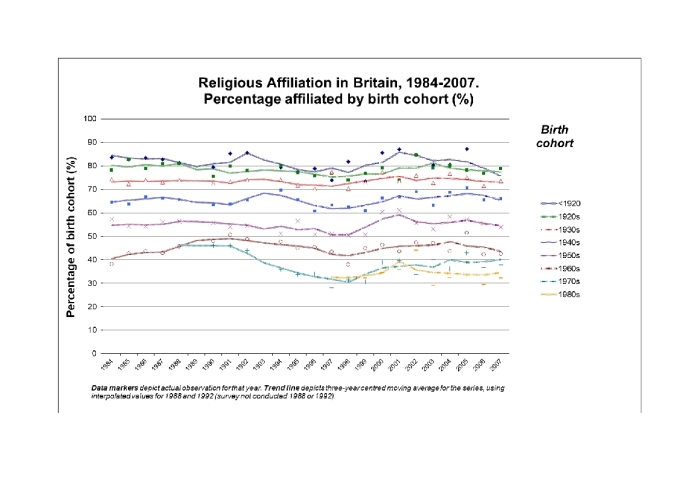
Programmatic secularism is the policy of separating religious and public life, ensuring that the state is free of religious influence and leaving religion as a purely private matter for citizens. Both the USA and France are secular republics, which means that religious leaders have no place in government, religious holidays do not necessarily coincide with national holidays, religion is not taught in public schools and religious values are not necessarily reflected in legislation. By contrast, in the UK the Monarch is both the head of state and the head of the established Church. Bishops (and more recently other religious leaders) are represented in the House of Lords, giving them the opportunity to influence legislation. Religious holidays coincide with national holidays; Christmas Day will always be a Bank Holiday, as will Easter Monday. Religious broadcasting is protected by law; it only recently started to include non-Christian broadcasting and still does not feature Humanists. Under the terms of the Education Act 1988 as amended, schools are actually required to organise acts of collective worship of a broadly Christian character and to teach about Religion for 5% of curriculum time and 50% of what they cover is reserved to the “main religious tradition of the UK” i.e. Christianity. In 2018 NatCen’s British social attitudes survey demonstrates the difficulty with this approach; 52% of people now claim to have no religion and only 14% now identify with the established Church of England. If the state seeks to represent the people, there is now a clear case for programmatic secularism, as “no religion” is now the belief of the majority of UK people. However there is resistance to policy changes designed to reduce or remove the influence of religion in UK public life and this resistance comes, for the most part, from Christians. To what extent, therefore, does secularism pose a threat to Christianity in the UK? The answer very much depends on how “Christianity” is defined. If “Christianity” refers to following Jesus’ teachings – to loving God and one’s neighbour (Mark 12:31-32), then secularism poses little threat.

Secular states like the USA and France permit citizens to practice their religion privately, so there would be no bar to baptism or worship or indeed to charitable giving and good works. In Matthew 6:1 Jesus taught his disciples: “Be careful not to practice your righteousness in front of others to be seen by them. If you do, you will have no reward from your Father in heaven.” He praised the widow for making her offering to the Temple treasury quietly and with total sincerity and devotion, contrasting her with the rich men making a show of giving only what they could easily afford. Arguably, Christians could better practice their religion when that practice is limited to being in private. In that case, there could be no confusion that engaging in worship might yield worldly rewards, whether legal, social or otherwise. Further, Jesus taught that ethical action is more important than religious ritual. Jesus made a point of healing people on the Sabbath (Mark 3), he made himself ritually impure by eating with sinners – saying “it is not the well who need a doctor, but the sick” – and he challenged the Pharisees who criticised the disciples for picking ears of corn on the Sabbath, pointing out that in their zeal to enforce the letter of the law they were ignoring its spirit, which is to protect life (Mark 2:23ff). For Jesus, the essence of Christianity lay in loving God and showing this by loving our neighbours as ourselves (Mark 12:31-32). In no way would being prevented from making a public show of ritual worship pose a threat to Christianity as understood like this.

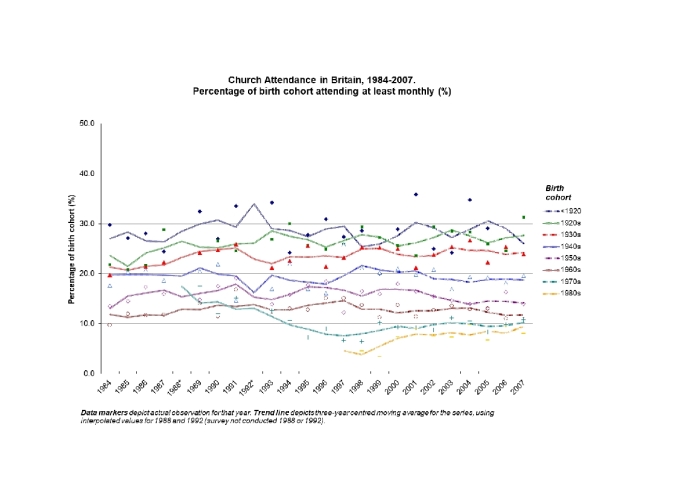
Certainly, phasing out faith schools would take away some options from religious parents in terms of educating their children in a faith, yet American Christian parents seem to have coped with the challenge of organising religious instruction outside school, whether in the home or through the Church, or paying for private education. Arguably, putting the responsibility for planning and overseeing the process of educating children in a faith back onto parents (and Churches) would cause them to take a greater interest in the efficacy of the process in terms of forming faith. This done, it might do something to stem the decline in Church attendance which is charted dramatically by the Brierley Institute’s Church Statistics research, which covers the period from the early 1980s to the present day. One of the key findings in the 2018 Faith Survey reads: “UK Church membership has declined from 10.6 million in 1930 to 5.5 Million in 2010, or as a percentage of the population; from about 30% to 11.2%. By 2013, this had declined further to 5.4 million (10.3%). If current trends continue, membership will fall to 8.4% of the population by 2025”[1] While there are obviously other factors contributing to this and while this trend does not follow through to France, Church attendance is far higher in the USA, where religion cannot be taught in schools. At least programmatic secularism could lead some Christians to practice their faith more actively, even if it leads others to abandon their nominal faith altogether. In addition, while actual research data is difficult to find, it seems likely that UK Faith schools do not have much effect on the religiosity of young people after they leave school. According to NatCen’s British Social Attitude Survey 2018, some 70% of 18-24 year olds in the UK claim to have no faith at all, a figure which has been rising steadily, despite more than 1/3 of UK schools having a faith designation[2]. Humanists UK point out the incongruity in designating so many schools as Faith Schools, when they do not reflect even the nominal faith of those in their areas. Further, in the UK, Faith schools have struggled to recruit Headteachers and RE teachers who are practicing members of their faith tradition and Faith schools have struggled to form faith when forced to admit 50% of their students from outside their religious tradition anyway, to facilitate multiculturalism and prevent ghettoization. Nowhere in the Bible does it suggest that Christians should expect the state to subsidise and/or facilitate the process of parents educating their Children in a faith. Nowhere does it suggest that the Roman state does or should even respect Christianity. In the Temple Jesus taught people to “give unto Caesar what is Caesar’s; give unto God what is God’s” (Mark 12:17) Which suggests that he envisaged peoples’ religious lives existing in parallel to their civic responsibilities. It follows that programmatic secularism in the UK would not pose a threat to Christianity if it is defined by the Bible and Jesus’ teachings. Rather, it would offer Christians the opportunity to experience their faith as early Christians did and force them to decide whether to commit or not.

Cases like the famous “Gay Cake” case involving Asher’s Bakery and its Belfast owners the MacArthurs may seem to point to the weakness of this argument. If laws conceived out of programmatic secularism make acting (or not acting) on religious principles illegal, then it seems that peoples’ ability to be Christian is under threat as a result of secularism. Nevertheless, Christianity was born into adversity, as a minority faith within a remarkably plural Roman Empire. Jesus taught his followers to… “take up your cross and follow me” (Matthew 16:24) always recognising that being a Christian was a brave choice that would entail significant hardships or even death. The whole point of Christianity was to do what is right, not what is easy, and earn an eternal reward in heaven. Almost all of Jesus apostles were martyred, along with innumerable early Saints. Coming into conflict with the authorities as a result of one’s Christian faith seems almost to have been a mark of a true Christian within the early Church. While secularism will lead to larger numbers of Christians finding that their faith brings them into conflict with the law, this is not necessarily a threat to Christianity. Indeed, during the early centuries of Christianity the sacrifices Christians had to and were willing to make for their faith drew attention to the religion and advertised its fundamental beliefs and benefits as nothing else could. In a sense, without opposition from the state, it seems doubtful whether Christianity would have spread as quickly and as far as it did. The fact that cases like those of the MacArthurs have attracted widespread publicity and have caused even non-Christian commentators to admit respect for the sincerity of peoples’ faith, suggests that the relationship between Christians coming into conflict with the state and the religion growing is not only a thing of the past. Further, data showing that Christianity is growing fastest where it encounters most opposition from the state supports this argument. Looking at the International Bulletin for Missionary Research (IBMR) for 2015, Christianity is growing most quickly in African countries like Nigeria and South Sudan where Christians are being persecuted by Muslim militia. In the 15 years to 2015 Christianity in Africa grew by a staggering 51% to 541 million. Similarly, in China Christianity exploded in popularity at a time when any form of religious practice was banned by the secular Communist state under threat of “re-education” in camps. The same pattern can be seen in North Korea today. In the Middle East, in countries where Bibles are banned, Christianity is experiencing exponential growth. By contrast, in Europe, where the state is either actively Christian or only procedurally secular, Christianity is in long-term and significant decline, Islam is the fastest growing religion and increasing numbers of people have lost faith altogether.  While Christianity can justly complain that secular laws impede peoples’ ability to act on their religious principles – when it comes to matters as diverse as mission and discipleship, denouncing homosexuality or gay marriage, wearing visible symbols of their religion or refusing to condone or facilitate what they perceive to be sinful behaviour – the suggestion that these laws or the conflict they cause threatens the continued existence of Christianity is misplaced. On the contrary, secular laws and the conflict they cause are likely to be the cause of growth in Christianity.

In conclusion, it seems that if “Christianity” refers to following Jesus’ teachings – to loving God and one’s neighbour (Mark 12:31-32), programmatic secularism poses little threat to its continued existence and might in time lead to renewed growth in the UK, where it has been in decline. Of course, if Christianity is defined in terms of Church institutions and particularly as the Church of England, then the threat posed by programmatic secularism would be real. A Church founded to facilitate a King’s divorce (and resolve a royal cash-flow issue) will obviously struggle when its privileges and protections are withdrawn. Antidisestablishmentarianism has always been a minority movement in the Church of England because of the certainty that divorcing Church and State would be traumatic and the difficulty of advertising the benefits succinctly on the side of a bus! Nevertheless, the growth in Evangelical Protestant and conservative Roman Catholic Christianity demonstrates that it is possible for Churches to thrive outside the UK establishment. If the Archbishop of Canterbury and other leaders of the Church of England were liberated from their establishment positions they would be able to speak out freely against social injustices and thus give witness to the true Christian message. While basic calls for tolerance and compassion from Justin Welby (such as in his recent speech to the TUC) always attract a barrage of press criticism for political meddling (as if that wasn’t always the job of an Archbishop!) if the Church was disestablished there would be no basis for such. While Church leaders would have a smaller platform – one commensurate with the numbers sitting in their pews – they would have the ability to represent Christian teaching and opinion on that platform, which is more than can be said at the moment. Similarly, without forcing families to confess beliefs they don’t have to secure a good education for their children, without forced acts of communal worship in Schools and without teaching about Baptism and Communion in classrooms, there might be less hostility for religion in general. Similarly, without a protected position in BBC schedules, the Church might lack prime time coverage of acts of worship… but would it really miss the bland, vanilla portrayal of what it means to be a Christian? Constant reinforcement of the (false) idea that Christianity is all about community singing, forced happiness and boring “thoughts for the day” read out by people nobody wants to listen to is far from being a help to the religion! It is fair to say that programmatic secularism in the UK would lead to further sharp decline within the Church of England – and particularly in the numbers of people who claim to be “CofE” but rarely attend Church – but whether this “threat” would harm the longer-term prospects of even this Church is uncertain.

[1] https://faithsurvey.co.uk/uk-christianity.html

[2] Parliamentary Briefing on Faith Schools, 2018.

“The arguments for the existence of God do nothing to support the God people actually worship” Critically evaluate this statement. [40]

It is fair to say that the arguments for the existence of God fail to prove the existence of God.  The ontological argument is the only one that sets out to deliver an a priori proof and as Immanuel Kant argued in his “Critique of Pure Reason” (1781) it is “so much labour and effort lost“.  It is equally fair to say that the inductive arguments for God’s existence, both Cosmological and Teleological, fail to demonstrate the existence of God conclusively.  Criticisms leveled at the arguments by David Hume, amongst many others, point out their several flaws and fallacies.  Nevertheless, to say that the arguments do nothing to support the God people worship is a big overstatement. [THESIS]

The ontological argument, for all it seems to rely on bad grammar by treating existence as a perfection and a predicate, remains a powerful thought-exercise for those who already believe.  For one example, Karl Barth – who utterly rejected Natural Theology – appreciated the spiritual depth of Anselm’s argument.  In “Faith Seeking Understanding” (1931), he suggested that Anselm was not trying to prove that God exists, but was rather meditating on how God exists.  For Barth “that than which nothing greater can be conceived of” is a revealed name of God which contains something of God’s nature.  Reflecting on it and seeking deeper and deeper understanding is an essential faith-activity, which supports and enriches peoples’ relationship with the divine.  For another example, the mystic Thomas Merton was inspired by Anselm’s “faith seeking understanding” and exploration of how God necessarily exists as his starting point in opening his mind to insights about God from all religions [Faith Seeking Understanding: Theological Method in Thomas Merton’s inter-religious Dialogue by Ryan Scruggs, Journal of Ecumenical Studies 46:3 2011].  Both Barth and Merton used Anselm’s ontological argument to support their understanding of and enrich their faith in God, in their different ways.  It is wrong to say then that this argument for God’s existence does nothing to support the God that people worship. [REASON]

Cosmological arguments point to God as the Prime Mover, uncaused cause and Necessary sustainer of the universe.  For St. Thomas Aquinas, these arguments show a posteriori how God must be eternal in the sense of being outside time and space, which in turn distances God from creation and limits how He can be understood to know and intervene in what happens.  On one level, this suggests that the statement “the arguments for the existence of God do nothing to support the God people actually worship” is reasonable.  Omnipotence – in the sense of being able to work miracles – omniscience – in the sense of being able to respond to prayer – and benevolence – in the sense of understanding and having a personal relationship with worshipers – are all crucial to the Christian concept of God.  Aquinas’ God, although well-supported by the cosmological argument – is not obviously the God most Christians worship.  Nevertheless, Aquinas’ ways to God  only serve as a preamble to the substance of his argument in the Summa Theologica, which seeks to show why the necessary being supported by observational evidence must be the God Christians worship.  It is true that for Aquinas, the meaning of divine attributes like omnipotence, omniscience and omni-benevolence has to be understood analogically and cannot be understood literally, univocally.  Yet he also maintains that there is real and positive meaning in claims such as “God is good”, which are central to Christian worship.  It is clear that Aquinas’ cosmological arguments establish the necessary existence of the God Christians worship, even if they do not by themselves explain how or why God must be as Christians worship Him. Therefore it is an overstatement to say that the arguments do nothing to support the God people worship.  [REASON]

Teleological arguments suggest a God who is more obviously involved in His creation than either ontological or cosmological arguments.  William Paley used the analogy of watch and watchmaker to describe the close relationship between creation and creator.  Even Aquinas’ fifth way suggests that God is the intelligence that directs inanimate things towards their ends (telos) “as an arrow is given flight by the archer.”  In “Dialogues Concerning Natural ReligionDavid Hume’s character Philo is right to point out that the observable evidence of creation includes things that seem poorly designed or even cruel and might more properly suggest an imperfect deity, or multiple deities, than the perfect God of Christian worship because in practice, most Christians are resigned to worshipping a God who at least allows evil and suffering, albeit for a morally sufficient reason.  For example, John Hick argued that God created human beings in His own image, with only the potential to grow into His likeness after passing through the “vale of soul-making” that is human life.  In “Evil and the God of Love” (1966) he argued that belief in a God who allows people to suffer for the spiritual benefit that they (or other people) may gain from that experience is compatible with Christian faith and worship.  After all, in the Garden of Gethsemane Jesus called out to “Abba, Father…” asking that “this cup of suffering” be taken away by God’s will.  God did not act to prevent his suffering, even when Jesus called out “Eloi, Eloi, lama sabachthani, which means “my God, my God, why have you forsaken me?” (Mark 15:34)  Christians do not worship a God who doesn’t know about or understand suffering and nor do they worship a God who even tried to create a world with no potential for horror… he placed the tree in the garden after all.  It follows that teleological arguments support the God Christians actually worship, “the God of Abraham, Isaac and Jacob” far more than they support the perfect “God of the philosophers”, to use Blaise Pascal’s distinction.  [REASON]

Pushing this line of reasoning might give more credence to the claim that “the arguments for the existence of God do nothing to support the God people actually worship.”  Certainly, ontological and cosmological arguments – if they are sound and cogent respectively – support the existence of a perfect God.  Anselm defined God as “that than which nothing greater can be conceived of,” Descartes defined God more straightforwardly as “Supreme Perfection” and Plantinga similarly defined God as a “maximally great being.”  Aquinas’ cosmological arguments support a God who is the Prime Mover, uncaused causer and de re necessary being sustaining the universe.  By definition, such a God is 100% actual and has no potential, is outside time and space and cannot change.  Aquinas successfully showed that this God must be all-good.  In the Aristotelian sense defining goodness in terms of fulfilling potential and evil in terms of falling short, a God whose nature is to unchangingly be 100% actual cannot be other than all-good.  Further, Aquinas successfully showed that this God must be all-powerful and all knowing in the sense of being the primary cause of everything that exists, what is responsible for things being as they are and no other way.  Nevertheless, Christians do not worship a God who is perfect in this abstract way.  The Bible casts God as the creator of everything, but a creator who has a defined purpose for each aspect of his creation (Genesis 1:27-31) and who can and does interact with and respond to people both in Eden (Genesis 2-3) and subsequently throughout Biblical History.  In Genesis God appears to Abraham – albeit in a mysterious way – then Jacob wrestles with God, mistaking him for a man.  In the New Testament God speaks to acknowledge Jesus as His son, Jesus calls God Abba (literally Daddy) and claims “the father and I are one” (John 10:30) before dying horribly on the cross.  It is difficult to claim that the God Christians worship is the abstract if all-powerful, all-good God supported by ontological and cosmological arguments.  [DISAGREE]  Nevertheless, the Nicene Creed affirms that the Christian God is the perfect God of the philosophers as well as being the God of Biblical history.  God is the creator both of what is “seen and unseen”, Jesus’ incarnation is part of the original creation, willed from the beginning of time rather than being a response to circumstance.  God speaks but through the prophets, acts but through the agency of the Holy Spirit.  It is fair to say that the Christian God, the God Christians actually worship, is paradoxical and mysterious but it is not fair to say that the God supported by the arguments is not the God people actually worship.  [EVALUATION]

In conclusion,  to say that the arguments do nothing to support the God people worship is a big overstatement. [THESIS] While it is true that the ontological argument and the cosmological argument point towards an abstract, perfect God which demands theological explanation to show as the God of Biblical history, it is unfair to say that the arguments do nothing to support the God people actually worship.  Certainly, as Karl Barth and Thomas Merton pointed out of the ontological argument, they are useful in enriching and sustaining faith by supporting deeper understanding of God’s nature.  Certainly, as Reformed Epistemologists like William Lane Craig have argued, cosmological arguments help believers to “defeat the defeaters” and show that faith – while not based on or dependent on arguments – is not irrational despite that.  In addition, as St Thomas Aquinas reasoned, a proper understanding of religious language shows that the attributes of the God supported by the arguments and the attributes of the God actually worshipped by Christians share meaning, even if that meaning is of a specific and limited type.  Finally, teleological arguments offer essential support for the God people actually worship, showing His creative care and causing people to reflect on the existence of evil and suffering in a way that is essential to Christian worship.  Without appreciating the reality of suffering – and rational reflection on God as designing intelligence encourages this – Christians could not understand the importance of the atonement or stake their lives on the hope for salvation, and in this case there would be little point in worship.  [Significance]


No true Christian could embrace Marxism! Discuss [40]

Clearly, the question is a controversial one and any response to it will depend on the definition of “true Christian” adopted and, to a lesser extent, on the working definition of Marxism, because the ideas of Marx and those of writers and politicians described as “Marxist” do not always coincide.  By way of illustration, for a Roman Catholic, obedience to the teachings of the magisterium is of primary importance in defining a “true Christian”, whereas for a Quaker individual conscience and relationship with the Spirit would be the defining factor.  For the purposes of this essay a “true Christian” will be understood to mean any member of a Church which accepts the Nicene Creed and the discussion will be limited to the compatibility between Christianity so-defined and the ideas of Marx himself.

The question of whether Christians can and should embrace Marxism is an extremely important one at the present time.  Although there have been debates about the potential compatibility of Christianity and Marxism since the 19th Century, the development of Liberation Theology – and in particular its confrontations with the Roman Catholic Church in 1984 and 1986 – brought has brought the question particular currency.  Furthermore, since 2014 Pope Francis has been giving clear signals that he would like to bring Liberation Theology back within the framework of the mainstream Church.  He has even been labelled a Marxist by some critics because of this and other related actions.  This has caused Christians to reflect on how Christianity should relate to Capitalism and to Marxism in the 21st Century world.  Should Christians be on the side of the free-market and accept the pursuit of profit as the main aim of human life?  Alternatively, should Christians be willing to engage with Marxism – for all its atheism – because its social analysis seems in tune with the New Testament and its message for the poor, alienated and exploited is one with some similarities to that promoted by the Church?  In the end the evidence points towards it being appropriate for “true Christians” to engage with Marxism, although they would have to stop short of becoming Marxist because to do so would necessitate atheism and a rejection of objective Truth, both of which would make “true” Christian faith redundant.

The New Testament contains many references which demonstrate similarities between both Jesus’ teaching and the practice of the Early Church and Marxism.  Firstly, through the Sermon on the Mount Jesus preaches a revolution.  The Beatitudes in Matthew 5 predict that all those groups who have been alienated and exploited by 1st Century Jewish society – the meek, the humble, the bereaved and the poor in spirit – would go on to inherit the earth in a new age.  Marx also preached a revolution, predicting that Capitalism would collapse and that the poor proletariat – alienated and oppressed by Capitalism – would rise up and seize control.   Secondly, through his encounter with the Rich Young Man in Mark 10, Jesus taught that the rich should share their wealth with the poor, seeing private property and privilege not as a right but as an opportunity to improve society as a whole and the lives of the poor in particular.  Jesus’ parable of the Rich Man and Lazarus in Luke 16 makes a similar point; the situations of the two men will one day be reversed and rich people will pay the price if they failed to share when they could.  Marx’s mantra “from each according to their ability, to each according to their need” seems to fit in with Jesus’ teaching perfectly… the rich (and talented) have the ability to contribute more than the poor and the poor have more need than the rich.  Thirdly, the Book of Acts Chapter 4-5 tells how the Early Church tried to put Jesus’ teaching into practice by implementing what Engels recognized as an early form of Communism.  Ananias and Sapphira were struck down by God for holding property back from the common pool, for not giving all they could have and for taking more than they strictly needed.  While Marx would have seen the idea of divine punishment as superstitious, he would have supported the moral of the story, that people who cheat and deceive for personal advantage should be subject to justice even to the point of forfeiting their lives. In short, Jesus’ ethical teaching seems to foreshadow much of Marx’s thinking and in this way it would appear that “true Christians” should be able to embrace at least the ethical element of Marxism.  

Further, many Christians – practicing members of mainstream Churches which use the Nicene Creed – have engaged with Marxism.  Thomas Hagerty was a Catholic Priest who was inspired to champion workers’ rights in 1890’s America because of his reading of Marx as well as the New Testament.  Martin Luther King was inspired by his reading of Marx and agreed with much of Marx’s analysis of Capitalism and society, although he stopped short of embracing Marxism because of its opposition to religion and its rejection of the idea of objective Truth.  More recently, Liberation Theology has brought together many Christians who have engaged with Marxism and some who are fully Marxists. In the 1980s and 1990s Jose Porfirio Miranda expressed the similarities between Jesus’ teaching and Marx’s analysis of Capitalism and society in books such as “Marx and the Bible” (1971).  Leonardo and Clovis Boff have been positive about Marxism, emphasizing the practical usefulness of Marxist analysis and revolutionary techniques and the common end of improving the conditions of the poor in “Introducing Liberation Theology” (1987).   The fact that many Christians, including ordained Catholic Priests, have embraced Marxism to some extent does lend support to the thesis, that true Christians can engage with Marxism.

Nevertheless, just because some true Christians have embraced Marxism does not mean that they should.  As one example, Gustavo Guttierez has been increasingly cautious.  While in 1974 he wrote “contemporary theology does in fact find itself in direct and fruitful confrontation with Marxism”  (A Theology of Liberation, page 53) in 1990 (after the 1984 condemnation of Liberation Theology issued by the Congregation of the Doctrine of the Faith) he stated that “at  no time either explicitly or implicitly have I suggested a dialogue with Marxism with a view to possible “synthesis” or to accepting one aspect while leaving others aside” (The Truth Shall Make you Free, page 63) “True Christians” have been less and less willing to speak about their approval of Marxism since the Roman Catholic Church voiced its opposition to Liberation Theology in the 1980s and it is probably fair to say that engaging with Marxism is unlikely to be a positive career move in some Churches.

Nevertheless, there is a difference between saying that “no member of the Roman Catholic Church can embrace Marxism!” and saying that “no true Christian can embrace Marxism!”  The fact that there were political reasons behind John Paul II’s denunciation of Marxism is obvious; 1984 and 1986 were at the height of the Cold War, during the Reagan administration.  The Church was under considerable political pressure to support US foreign policy and there was a real need to put distance between the Church and Communist regimes which were murdering Priests and outlawing Church attendance because they embraced Marx’s call for “the abolition of religion” (Deutsch-Franzosische Jahrbucher) on the grounds that it is a tool of oppression which he famously likened to opium. As so often happens, “my enemy’s enemy” became a friend; the Cold War made developed the unlikely association between Christianity and Free-Market Capitalism.  While proponents of Prosperity Theology such as Creflo Dollar might argue that Christianity is perfectly compatible with deregulated markets and right-wing libertarian government, in fact this approach is not supported by a faithful reading of the New Testament. While the Old Testament certainly teaches (in places) that wealth is a blessing from God and a sign of His favour, Jesus explicitly rejected these teachings through both his words and his actions on numerous occasions.  Jesus willingly touched lepers (making himself spiritually impure – not something anybody, let alone anybody wealthy would do) and washed the feet of his disciples (the work of a slave).  Jesus said that “it is easier for a camel to go through the eye of a needle than for someone who is rich to enter the kingdom of God.” (Matthew 19) and said that people need to be like little children, as unconcerned about possessions as the birds of the air or the lilies of the field, to have a hope of entering heaven.  Whether or not Liberation Theologians are right to embrace Marxism in developing their “hermeneutic of suspicion”, they are right that rich people get short shrift in the New Testament and are generally cast as sinners.  It seems that engagement between “true Christians” and Marxism is unwise for reasons that are more political than ideological and that there is potential for fruitful discussions between Theologians and Marxists in the future, now that the political landscape has changed somewhat. 

Certainly, Pope Francis has suggested – both in words and deeds – that there is a future for engagement with Marxism.  In 2014 the Pope welcomed Gustavo Guttierez to the Vatican for meetings and Leonardo Boff has been a vocal supporter of Pope Francis, his encyclicals and actions.  Pope Francis has renewed the commitment of the Church to social justice and has been outspoken in his criticisms of Capitalism, speaking of how it alienates people and how it exploits the poor.  It is quite obvious that Pope Francis was affected by his experience working as a Bishop and previously a Jesuit in South America, the heartland of Liberation Theology.  This point has not been lost on Pope Francis’ critics.  John Finnis and Germain Grisez, leading conservative scholars of Natural Law, wrote an open letter to Pope Francis in 2016 criticizing steps he had taken to make the Church more forgiving and inclusive.  More recently, several Cardinals and Bishops have co-signed a letter calling for Pope Francis to stop trying to reform the Church, to stop shifting its emphasis towards providing the “preferential option for the poor” that was the basis for Catholic Social Teaching through the 1960s and 70s, but which had been lost somewhat in the 1980s and 90s. Pope Francis’ encyclical Evangelii Gaudiam affirmed that “Without the preferential option for the poor, ‘the proclamation of the Gospel … risks being misunderstood or submerged’.”  He sees improving the lot of the poor in this life as central to doing Christ’s work – and this would suggest that True Christians should at least engage with Marxism to this end – but other Christians disagree most strongly. 

Not least among these critics, who have a different vision of “true Christianity” would be Protestant Evangelical Churches.  Inspired by the teachings of Luther and Calvin, many Evangelicals believe that people are justified by faith alone and that the most important part of Christianity is spreading Jesus’ message of salvation and baptizing people so as to give them the prospect of a better life after death.  Protestants might think that there is less need to improve the conditions of the poor in this life, because this life is only a temporary preparation for an eternal reward (or punishment).  Without Purgatory, for which there is little scriptural foundation, Protestants focus on the saving power of faith and the need for God’s grace; people don’t save people, God does. It is interesting that Evangelical Churches are growing quickly in South America, in part because of support they are receiving from Churches and sometimes government agencies in the USA.  In 2006 in the National Catholic Reporter, John Allen recorded that “Latin American Protestants shot up from 50,000 in 1900 to 64 million in 2000… with Pentecostal and charismatic churches making up three-quarters of this number.”  It is probably fair to say that the shift towards Protestantism in the heartlands of Liberation Theology will, in time, affect the numbers of Christians who would agree that “no true Christian could embrace Marxism!”

In conclusion, it is appropriate for “true Christians” to engage with Marxism, although they would have to stop short of becoming Marxist because to do so would necessitate atheism and a rejection of objective Truth, both of which would make “true” Christian faith redundant.  The evidence from the New Testament, history and the teaching of Pope Francis all support this conclusion, although it would be roundly rejected by some Protestants, who have a very different vision for what “true Christianity” is about.   Perhaps the most important reason for engaging with Marxism is that it caused Christians to re-examine and consider Jesus’ teaching on wealth and poverty and to think again about what He meant by the Kingdom of God.  In the 21st Century it is easy and convenient to focus on the epistles with their occasional references to a purely spiritual afterlife and ignore the overwhelming number of references to a renewal of this world in the Gospels.  Perhaps we choose to ignore the Gospels because they are demanding of us, collectively as well as individually.  Jesus undoubtedly called for practical action (orthopraxy) as well as the right words (orthodoxy), for believers to give materially as well as spiritually and to build a better this-world in preparation for the second-coming.  He asked a lot of us and most of us fall well short.  It is easier and more convenient to ignore demands we feel that we can’t meet, but that doesn’t make it right to do so. Perhaps, in the end, “true Christians” should go further than engaging with Marxism and start engaging with Jesus’ words and example. That might start a real revolution!

“Augustine’s theory of Original Sin has no place in the 21st Century world” Discuss (40)

Original sin is increasingly unpalatable in the 21st century world.  The idea that human nature is sinful to the extent that even new babies are in need of salvation and liable to go to hell if unbaptized is difficult to accept in a western, secular society which idealizes childhood, its purity and its innocence. In addition, the number of unbaptized infants who die seems to be increasing with the development of IVF, the rising world-wide use of abortofascient contraceptives and abortions as well as with fewer parents choosing to baptize their children.  Those educated in liberal societies are less and less willing to accept that a God who exacts justice through the fires of hell could be considered good.  Arguably, original sin is even more difficult to accept in parts of the world where infant mortality of a more traditional sort remains stubbornly high.  What Priest would relish informing a bereaved mother that the eternal fate of her unbaptized child is in question?  Muslims have no concept of original sin, so it is easy to see why Christians in Africa would be as likely to want to agree with the title statement as Christians in the UK would be.  The Roman Catholic Church acknowledged the difficulties with original sin in 2007, the International Theological Commission issuing THE HOPE OF SALVATION FOR INFANTS WHO DIE WITHOUT BEING BAPTISED which was widely interpreted as the Church stepping back from original sin so are as it was able to without undermining previous doctrine and the idea of infallibility. Clearly, St. Augustine has an important place in the 21st Century world.  New books about his life and work are published every year, university courses are devoted to his ideas and his work continues to be enshrined in the doctrine of the Roman Catholic Church.  Augustine is one of the four original Latin Doctors of the Church – the Doctor of Grace.  Further, Augustine’s theology is enshrined within the doctrines of Protestant Churches following Luther and Calvin, who were inspired by his teaching on grace and justification through faith alone.  Given that St Augustine has an undeniably important place in the 21st Century world, the statement must be understood to refer to the place original sin has within the thinking of St Augustine.  Is it possible to argue that Augustine’s theology could work without original sin?  Unfortunately, it is not possible and original sin continues to be important, however distasteful some of its implications might be in the 21st century world.

St. Augustine argued that human nature is sinful. In his Confessions, he described how even babies have sinful natures, which show themselves when they have to share their milk. “I myself have seen and known an infant to be jealous though it could not speak. It became pale, and cast bitter looks on its foster-brother… may this be taken for innocence, that when the fountain of milk is flowing fresh and abundant, one who has need should not be allowed to share it, though needing that nourishment to sustain life? Yet we look leniently on these things, not because they are not faults, nor because the faults are small, but because they will vanish as age increases. For although you may allow these things now, you could not bear them with equanimity if found in an older person.” Confessions 1/7:11  This might suggest that sin is part of our god-given natures, but Augustine cannot allow that sin is God’s fault or a necessary part of His creation.  To do so would be to suggest that God is either limited in goodness or limited in power, neither of which would be compatible with Christian faith.  Instead of limiting God, Augustine argued that sin is our human fault; we choose to misuse our free-will and put self-love (cupiditas) ahead of generous love (caritas), falling into sin and earning just punishment from God. For Augustine, we do this both individually and as a human race.  Without original sin, free-will offers an inadequate defence of God’s omnipotence and goodness, given that children suffer as a result of natural evil just as much (or even more) than do adults and don’t seem to deserve punishment on account of their own choices.  Adam chose to betray God, stupidly putting his self-love ahead of the generous love he should have had for mankind and for God.  All people were “seminally present” in Adam, so humanity collectively turned away from God at the Fall.  Following from this, even the tiniest infant deserves all the suffering it might experience because it inherits sin from Adam and cannot deserve grace without salvation through Christ’s atoning sacrifice. Original sin enables Augustine to side-step the problem of innocent suffering by arguing that there is no such thing as innocent suffering.  Without original sin, Augustine would have to fall back on the idea that innocent suffering can be justified, whether through the learning opportunities and growth it might afford (Irenaeus, Hick) or by being offset by the beauty and goodness it enables (Aquinas).  Any attempt to justify innocent suffering by appealing to the ends it serves is distasteful however.  As Kant pointed out, reason demands that we treat humanity “always as an end in itself and never as a means to an end“.  Can we hold God to a lower standard?  Could a God who allows appealing child-cancer as a means to an end, however great that end might be, be a good God?  Still less could that God be good when we consider that He is also all-powerful and so might reasonably be able to create a world in which the innocent suffering is unnecessary even as a means to the end. Without original sin, there would be no way to defend an omnipotent omnibenevolent God against charges of allowing natural evil and the suffering it causes to children.

In addition, Christ’s sacrifice and the salvation it offered would be unnecessary without original sin.  If human beings are only accountable for sins they choose individually, children and any adults who managed to live a sin-free life could go to heaven without grace and without the service of the Church and its sacraments.  Augustine argued against Pelagius and his suggestion that human beings possess the power to attain their own salvation, not least because Pelagianism opens the gates of heaven to good non-Christian and makes Jesus, who clearly said “I am the way, the truth and the life.  No-one comes to the Father except through me” (John 14:6) a liar.  For Augustine as for St Paul and as for most Christians around the world today, partaking in Jesus’ atoning sacrifice is necessary for salvation.  Without original sin it is difficult to see how this could be true, as some people would be free from sin and worthy of salvation without Jesus, faith or God’s grace.  Such a position could not be compatible either with Roman Catholic Christianity, which requires faith in the sacraments of the Church and their power to cleanse people of original sin… Born with a fallen human nature and tainted by original sin, children also have need of the new birth in Baptism to be freed from the power of darkness and brought into the realm of the freedom of the children of God, to which all men are called. The sheer gratuitousness of the grace of salvation is particularly manifest in infant Baptism. The Church and the parents would deny a child the priceless grace of becoming a child of God were they not to confer Baptism shortly after birth.”  Catechism 1250 Such a position could not be compatible with Protestant faith either, with its emphasis on justification through faith and the necessity of God’s grace.  As Luther wrote… “Man…does not do evil against his will… but he does it spontaneously and voluntarily. And this willingness or volition is something which he cannot in his own strength eliminate, restrain or alter.” (Luther, The Bondage of the Will, p. 102) Further, as Luther wrote in his Preface to the New Testament… “the gospel demands faith in Christ: that He has overcome for us sin, death, and hell, and thus gives us righteousness, life, and salvation not through our works, but through His own works, death, and suffering, in order that we may avail ourselves of His death and victory as though we has done it ourselves.” (Luther, Preface to the New Testament) In this respect Protestant Christian faith and Roman Catholic Christian faith concur; original sin is an undeniable part of human nature.

It is sometimes claimed that Orthodox Christians sustain a faith that is not dependent on original sin. If this was true, Orthodoxy might offer a way to agree with the title-statement and dispense with the theory of original sin.  However, while it is true that St Augustine has less prominence within the Eastern tradition of Christianity and while original sin has no place in Orthodox doctrine, it is wrong to suggest that Orthodox Christians have no concept of inherited sin or that they disagree with other Christians over either the sinfulness of human nature or the necessity of grace and salvation through the Church.  Orthodox Catechisms affirm that Orthodox Christians believe that human beings inherit sin from Adam and need God’s Grace and Christ’s salvation much as other Christians do:  “all have come of Adam since his infection by sin, and all sin themselves. As from an infected source there naturally flows an infected stream, so from a father infected with sin, and consequently mortal, there naturally proceeds a posterity infected like him with sin, and like him mortal.” Catechism of St. Philaret (Drozdov) of Moscow, 168  Orthodox Churches look to the teachings of Church Fathers such as John Cassian who taught that humans have a depraved nature and suffer from inherited sin.  Orthodox Churches also accept the writings of St Paul, on whose ideas about Adam and Christ as the new Adam in 1 Corinthians 15 Augustine based his theory of original sin.  Orthodox Christianity does not, in the end, offer a way of accepting the title statement and agreeing that original sin has no place in the 21st century world, although Orthodox Christians might not place such emphasis on Augustine as the originator of the theory of original sin.

In conclusion, St Augustine’s theory of original sin has an undeniably important place in the 21st Century world.  Although many Christians might wish is was otherwise, in practice it is not possible to sustain belief in a perfect God or the necessity of His grace and Salvation through Christ and the Church without original sin.  To put it quite clearly, if original sin has no place in the 21st Century world, then neither does Christianity.  The Roman Catholic Church has gone as far as is reasonably possible in retreating from teaching that Limbo is the certain destination of unbaptized infants and leaving their fate to the mercy of God, with whom “all things are possible” (Matthew 19:26) and whose ways human beings can scarcely understand after all (Isaiah 55:8-9).

“Religious faith requires belief in a separate soul” Discuss (40)

Assuming that the statement refers to Christian faith, through the history of Christianity there have been Christians who have believed in a separate soul (e.g. Descartes) and others who have not (e.g. St. Matthew) but the crux of the issue is whether such a belief is required.  This begs the question “by who or what standard?”  Obviously, belief in a separate soul is not required by the Creeds; the Apostles’ Creed affirms “I believe in the resurrection of the body and life everlasting” which suggests that Christian faith requires not a dualist but an avowedly monist position.  Further, the Catechism of the Roman Catholic Church 1059 affirms that “The holy Roman Church firmly believes and confesses that on the Day of Judgment all men will appear in their own bodies before Christ’s tribunal to render an account of their own deeds”.  It is clear that no belief in a separate soul can be required by orthodox Christian faith, although I will argue that belief in a separable soul might make it easier to sustain faith in the face of life’s challenges and apparent inequities.

Christian faith promises salvation; union with God and restitution for the injustices apparent in this life.  Nevertheless, the New Testament is unclear about how this salvation will come about and whether the afterlife will entail bodily existence or be purely spiritual.  The Synoptic Gospels suggest an immanent eschatology; descriptions of heaven and hell are earth-like and seem to suggest that people will have resurrected bodies to experience reward or punishment much as we experience these in the coming Kingdom of God.  Matthew 25 (the Parable of the Sheep and the Goats) suggests that the evangelists expected that Jesus will soon return to judge the living and the dead and supports a physical understanding of hell ‘Depart from me, you who are cursed, into the eternal fire prepared for the devil and his angels” (Matthew 25:41)  Luke 16:23-24 also supports this view “So he called to him, ‘Father Abraham, have pity on me and send Lazarus to dip the tip of his finger in water and cool my tongue, because I am in agony in this fire.’ Other references to the final judgement are similar “And I heard a loud voice from the throne saying, “Look! God’s dwelling place is now among the people, and he will dwell with them. They will be his people, and God himself will be with them and be their God. ‘He will wipe every tear from their eyes. There will be no more death’ or mourning or crying or pain, for the old order of things has passed away.” (Revelation 21:3-4) and this vision of the end-times seems consistent with Old Testament references, such as those in Ezekiel and Isaiah.  Christian faith supported by references in the synoptic gospels would require no belief in either a separate or a separable soul, only a belief in physical resurrection. Nevertheless, belief in physical resurrection is difficult to sustain in the modern world.  There is a complete lack of supporting evidence and it is difficult to see how it could deliver the promised reward (or punishment) in a fair and just manner.  Surely, those who died hundreds or thousands of years before the final judgement would be at greater risk of their bodes having disintegrated.  Surely, those who died as infants, after losing limbs, in extreme old-age or whose bodies were destroyed utterly would seem less likely to get their just deserts.  While “all things are possible with God” (Matthew 19:26) and Christian faith requires a belief in God’s omnipotence, it is clear that this cannot extend to God doing the logically impossible, or else most theodicies would collapse and God could not also be all-good. While God resurrecting people out of nothing by reassembling them from dispersed dust into their ideal form may not be logically impossible, it comes close to being so in some cases.

It is obvious why many 21st Century Christians prefer to believe in an eternal life, reward or punishment which begins soon after each person’s death.  A belief in immediate reward and punishment would work either with dualism, belief in a separate soul, or with a belief in re-creation into a parallel dimension.

Immediate reward or punishment through dualism, in a purely spiritual sense, is superficially easier to reconcile with science and reason.  There have been many reports of Near Death Experiences which, if credible, would to support belief in disembodied existence immediately after death.  Pam Reynolds’ experience during standstill surgery in 1991 is often seen as one of the best documented cases. More recent research conducted by Dr Sam Parnia at the University of Southampton might suggest that the soul could continue after death without a body.  In addition, a spiritual interpretation of the afterlife would be more rationally defensible than physical resurrection.  It is easier to see how a soul could survive eternally; a risen body would still be physical and so subject to aging, sickness, disability and other associated limitations.  It is easier to see how a soul could come “face to face” with God, who is not normally seen to have a physical existence as human beings do. Further, parts of John’s gospel, the Johannine letters and Paul’s letters seem to support a more spiritual interpretation of eternal life. Verses such as “So we fix our eyes not on what is seen, but on what is unseen, since what is seen is temporary, but what is unseen is eternal.” (2 Corinthians 4:18) and So then, if anyone is in Christ, he is a new creation; what is old has passed away – look, what is new has come!” (2 Corinthians 5:17) and “Whoever sows to please their flesh, from the flesh will reap destruction; whoever sows to please the Spirit, from the Spirit will reap eternal life.” (Galatians 6:8) seem obviously Platonic in their influence and are closest to dualism. However, although faith with a purely spiritual eschatology seems easier to reconcile with science and reason, it comes with significant problems and has been relatively rare through the history of Christianity. Belief in a separate soul – dualism – is difficult to defend in philosophical or scientific terms and suggests other beliefs and practices which are incompatible with Christian theology. Descartes argued for a Christian dualism, but struggled to provide a coherent account of why the soul would be enfleshed, how soul and body interact and how a disembodied soul could experience reward or punishment in the way that would be necessary for Christian promises of eternal life to be meaningful.  The Catholic Church never accepted the idea that eternal life could be purely spiritual and disembodied because this might seem to dilute the punishment of hell – annihilation or distance from God would scarcely seem a disincentive to people who have decided to commit mortal sins after all.  Further, by the Middle Ages the Church realized that dualism supports an utter contempt for the physical body, which can lead people towards extreme and unhealthy asceticism or towards a disregard for the sins of the body and the belief that its sins – sexual sins included – are less significant.

Belief that the body can be re-created in a parallel dimension after death to receive reward or punishment is far preferable.  Seeking a middle-way between the difficulties of basing faith on a future physical resurrection and basing it on dualism and a purely spiritual eternal life, St Thomas Aquinas developed his Theology on the basis of Aristotle’s Philosophy.  Rejecting the dualism proposed by his teacher Plato, in his Metaphysics, Aristotle had set out how all beings have four different types of cause; material causes (physical ingredients), efficient causes (agents), formal cause (what makes something what it is, its definition) and a final cause (the purpose or end to which its existence pertains). Aristotle understood that the soul is the formal cause of the human being, what makes it what it is and defines its existence.  Unlike Plato however, Aristotle did not see the form of a being having any separate metaphysical existence.  The form depends on the materials it specifies, and the end towards which it works.  The soul is, in effect, the function of the body – what Gilbert Ryle later described as “the ghost in the machine” – it gives the impression of being a separate entity but in fact it depends entirely on the physical body for its existence. This is where Aquinas departed from Aristotle; he argued that on death the body is re-created in a parallel heavenly dimension and that the new unity of soul and heavenly body is subject to punishment and reward.  Arguably, this idea of re-creation has a basis in scripture; references such as “They are buried as natural human bodies, but they will be raised as spiritual bodies.” (1 Corinthians 15:42-44) can be interpreted as Biblical support for Aquinas’ “modified dualism”.  Further, John Hick developed a defense of re-creation into a parallel dimension through the “replica theory” which he developed in Death and Eternal Life (1976).  As Hick argued, provided that the replica retains the memories of the original, difficulties with spatio-temporal continuity can be overcome.  When Captain Kirk said “beam me up Scotty!” there was no doubt that Kirk remained Kirk although there was a break in his spatio-temporal existence. Aquinas’ theory of re-creation supports Christian faith far better than either monism and physical resurrection or dualism and purely spiritual reward/punishment.  It avoids both the challenges presented by science and reason to belief in physical resurrection and the theological pitfalls of dualism, while straining credulity to a lesser extent because it requires only that the soul could be briefly separable, not that it must be sustained in a separate state.  For this reason, Aquinas’ theory was adopted into the doctrine of the Roman Catholic Church at the Council of Trent in the 16th Century.

In conclusion, it is clear that orthodox Christian faith does not require belief in a separate soul.  Christian faith can be sustained through a belief in physical resurrection, either in the future starting with the final judgement as the Synoptic Gospels, Creeds and Catechism suggest, or through re-creation into a new body in a parallel dimension as St Thomas Aquinas suggested.  Re-creation does not require belief in a separate soul, but does suppose that the soul is separable.

“Religion will have no place in 22nd Century Britain!” Discuss (40)

Religion is in decline in 21st Century Britain. This does not seem to be due to an increase in peoples’ understanding of science and acceptance of it as a complete explanation for life.  As Richard Dawkins has observed, even non-religious people remain wedded to unscientific beliefs and the battle for science and reason is a long way from being won, even in Britain which is one of the most secular countries in the world. In a “post-truth” era, people are increasingly willing to question scientific method and accept “alternative facts” on the strength of little more than popular opinion or convenience. Further, there is no clear correlation between supernatural beliefs and religiosity in Britain.  For examples, a YouGov poll in 2017 suggests that only 19% of British Christians have any difficulty accepting the Theory of Evolution through Natural Selection as a full explanation for human life and a YouGov poll in 2015 suggested that only 55% of self-identifying Christians actually believe in God!  Clearly, some people claim religious affiliation and even attend a place of worship, while not subscribing to the most basic doctrines of that religion.  Further, it is probably fair to say that a lot of people who do not attend a place of worship maintain religious beliefs.  Nevertheless, NatCen’s Social Attitudes Survey of September 2017 made headlines when it reported that 53% – a majority – of the British public now describe themselves as having “no religion”, up from 48% in 2015 and 31% in 1983.  From a straightforward statistical perspective, it would probably be fair to say that Religion will have a much smaller place in 22nd Century Britain than it does in 21st Century Britain. 

Of course, statistics do not provide a complete picture; they need to be contextualized and interpreted, as well as to be tested for validity.

Firstly, it is wrong to infer that because the number of people with a particular characteristic in a society is small that that characteristic “has no place” in society.  Consider; the percentage of people who identify as transgender or even homosexual in Britain is small.  Estimates suggest that around 1% of people are gender nonconforming to some extent and the 2013 ‘Integrated Household Survey’ undertaken by the Office for National Statistics found that just 1.1% said they were ‘gay’ or ‘lesbian’ and 0.4% said they were bisexual on a sample of 178,197 British adults. This suggests that there are about 545,000 homosexual and 220,000 bisexual adults in the UK but relatively few people would accept that this is evidence for gays, lesbians and bisexuals, their issues or culture, having “no place in” our society.

Secondly, the headlines of the data conceal the fact that both the religious landscape and the intensity of religiosity in Britain are changing as a result of evangelism and immigration.  The numbers of evangelical Christians, of Muslims is rising and is projected to rise further in the coming decades according to Pew Research in 2015.  Reasonable estimates suggest that the proportion of Muslims in Britain will increase towards 10% by 2050.  Further, Pew Research in 2015 suggested that Religion is very important to more Evangelical Christians and Muslims in the US than it is to members of more traditional Churches.  If the same is true in the UK, then the shift from traditional Churches towards Evangelical Churches and the increase in numbers of Muslims could signal an increase in how important religious people think religion is in their lives.  While the raw number of religious people might be much lower in the 22nd Century Britain than it is in the 21st Century Britain, these people might well see religion as more important than many religious people do today.  Possibly, the influence of religion will not decline as as sharply as the raw percentages might suggest it should.  On this basis, Religion might still have a place in 22nd Century Britain.

Thirdly, the sample size used by NatCen to gather religious affiliation and attendance data is small and its conclusions are contested.  NatCen’s surveys typically draw on fewer than 2000 responses, so the margin for error on projections of proportion across the sample would be just less than 3%, with a substantially higher margin for error on projections for age-cohorts, which are sometimes dependent on excessively small samples such as the 20 responses available for the before 1920 cohort in 2008.  Further, UK Census data suggests that the NatCen figures for religious affiliation may be significantly lower than the actual figures. For example, in 2001 NatCen suggested that 54% of the British population was Christian whereas the Census suggested 72%.  In 2011 NatCen suggested that 47% of the British population was Christian whereas the Census in the same year suggested that the figure was 59.3%.  Further, by the same comparison, NatCen seems to inflate the numbers of people who are not religious even more dramatically.  For example, in 2001 NatCen suggested that 41% of British people were not religious whereas the Census in that year suggested that the figure was just 15%.  In 2011 NatCen suggested that 46% of the British population was not religious while the Census suggested a figure of 25.1%.

Despite significant issues with the statistical evidence, it is clear that both NatCen and the Census data support the principle that religious affiliation is declining steeply and that the number of people with no religion is increasing rapidly.  Projecting forward it might be inferred that religion will have died out in Britain by the 22nd Century.  Indeed, NatCen’s figures suggest that the percentage of religious people has been falling by approximately 1% per year and that 71% of 18-24 year olds claiming to have “no religion” in 2016, compared with only 27% of those aged 75+.  Although the margin for error in these statistics is quite sizable, on this basis it might seem reasonable to argue that the % of religious people will be negligible by the mid 21st Century and that Religion will indeed have no statistical place in 22nd Century Britain.

Such a conclusion might seem to ignore the effect of age on religiosity.  It is clear that as people age they tend to become more religious.  Argue, Johnson and White documented this in the Journal for the Scientific Study of Religion back in 1999.  They stated that… “The results show a significant, non-linear increase in religiosity with age, with the greatest increase occurring between ages 18 and 30...” (Abstract)  This would make sense given analyses of Religious belief put forward by scholars from Feuerbach through Durkheim to Freud.  As Feuerbach and later Durkheim noted, Religion fulfills societal needs and seems to be projected and shaped by societies for their own purposes, such as to promote conformity or a collective moral conscience.  As Freud noted, a similar pattern applies to individuals, with religious beliefs and practices fulfilling psychological needs and desires for most people and so, arguably, being projected by the subconscious mind to quell anxiety.  If religion is a man-made phenomenon, a natural response to personal and social needs, then it would make sense for religiosity to be more apparent in older people who are more likely to have experienced the need for community, conformity and comfort.  If, as Freud suggested, God acts as a father-figure for those without a father it would make sense that belief in God would be more apparent among those who have lost their parents and are generally more lonely and isolated.  If, as Durkheim suggested, religion comes into being and is legitimated through moments of what he calls “collective effervescence” then it would make sense for older people – who are more likely to have had experience of such “moments” – to believe and belong. British Social Attitudes Graphs_001

British Social Attitudes Graphs_002However, once adjusted for aging, the statistics still suggest a real and significant decline in Religious affiliation and attendance. D. Voas and A. Crockett, ‘Religion in Britain: Neither Believing nor Belonging’Sociology (2005), vol. 39, pp. 11-27 analyse British Social Attitudes by age-cohort, noting that affiliation and attendance declined markedly from cohort to cohort, but remained relatively steady in both measures across a 23 year period from 1984 to 2007 for each cohort born before 1970.  In addition, for the 1970s cohort however, affiliation declined from an average 46% in 1990 (when most of the cohort would have been teenagers) to an average 28.1% in 1997 (when most of the cohort would have been starting their careers).  Why the 1970s cohort were particularly susceptible to secularization during the 1990s is an interesting area for research, as is what the effects of this on the children of those in the 1970s cohort will be.  However, as it stands this research suggests that both on the basis of the lower rates of religious affiliation and attendance seen in successive age-cohorts through the 20th Century and into the 21st Century and on the basis of a further decline in religious affiliation and attendance seen during the 1990s within the 1970s cohort, it is reasonable to project that in the absence of other factors, religious affiliation will decline towards zero over the next century.  

Yet what might these “other factors” be and how might they still affect the place of religion in 22nd Century Britain?

One factor might be apparent in NatCen’s figures for the 1980s cohort rates of affiliation, which rose from 32.6% in 1997 (when the cohort were mostly teenagers) to a high of 39.2% in 2001, before returning to 32.3% by 2007 (when most of the cohort would have been in their 20s).  The short-lived spike in religious affiliation within the 1980s cohort around 2001 is mirrored within the 1950s and before 1920 cohorts, but was not evident in the attendance figures… apart from for the before 1920 cohort, who seem to have attended places of worship in 2001 and again in 2005 in significantly higher numbers.  It is tempting to interpret the correlation between higher church attendance among elderly people and big terrorist attacks as having some sort of causative explanation.  Going back to Feuerbach and Freud, perhaps the shock of 9/11 and 7/7 caused people to seek solace in religion?  Going back to Durkheim and thinking about Marx, perhaps the trauma of the attacks and the “war on terror” can explain the need for a collective religious response, both practically and politically.  If religion is the “opium of the masses” it would be reasonable to see more of it being used – rightly or wrongly – when the masses are in real pain!  Nevertheless, if the breakdown of the statistics is anything to go by, the statistical spike was not demographically uniform and nor did changes in affiliation rates translate into attendance.  Only the oldest people actually attended a place of worship more often in 2001 and in 2004-5; there is no apparent change in NatCen’s attendance figures for younger people and the attendance of the 1960s cohort actually dropped in that year and in 2005.  Perhaps the statistical spike in affiliation in 2001 and around 2005 is more to do with expressing solidarity, cultural and moral identity and to do with asserting hope in a seemingly hopeless situation, than it is to do with any actual change in what people believe or do in terms of religion.  In part, this seems to confirm Max Weber’s suggestion that religion emerges out of peoples’ need to respond to the injustice of evil and suffering and out of their need to believe in salvation and that something they can do could lead to a righting of this injustice.  What might the principle that people might be willing to state religious affiliation in greater numbers at times of social stress suggest about the place of religion in 22nd Century Britain?  Just that religion will probably continue to have a place in 22nd Century Britain and that then, as now, that place will be more apparent at times of national crisis and when people feel the need to assert control over their fates. 

Further, the population is aging.  This trend might be interrupted or even reversed by the reduction in antibiotic efficacy, the increase in cancers, the growing likelihood of pandemics as well as by decades of under investment in health and social care etc, but if it continues even at a slower rate, the proportion of very elderly people in the 22nd Century Britain might well be larger than it is today.  Sadly, a higher proportion of very elderly people is likely to result in a higher proportion of people suffering from poverty, loneliness, isolation and depression, all of which are indicators for higher rates of religiosity.  In “Religion and depression: a review of the literature” (1999) McCullough and Larson found that… “some forms of religious involvement might exert a protective effect against the incidence and persistence of depressive symptoms or disorders.”  Surveying more than 440 pieces of research, in “Religious and Spiritual Factors in Depression: Review and Integration of the Research” (2012) Raphael Bonelli et al found that  “Religious beliefs and practices may help people to cope better with stressful life circumstances, give meaning and hope, and surround depressed persons with a supportive community.”  According to a 2008 study, people who are lonely are more likely to become religious while rates of loneliness in the UK among older people are high and arguably rising, perhaps as a result of families dispersing and the long hours worked by British people.  These studies seem to support Freud’s suggestion that Religion can often help people to cope with voids in their lives and Jung’s suggestion that religion is about much more than a world-view or a set of rituals and is better understood as a process of working out our relationship with reality.

In addition, Gallup research in 2009 found that Religion is typically far more important to the population in poorer countries than it is in richer countries and that there is a direct correlation between economic prosperity and religiosity. If rates of religiosity in Britain have a relationship with the economy, then the place that religion has in 22nd Century Britain may depend on the long term economic future of the country.  Of course, the relationship between religion and economics was charted more than 100 years ago by Karl Marx and then by Max Weber, who both understood how religion can function as a tool of capitalism which keeps ordinary people motivated and engaged with the market and the political system which puts it first when it singularly fails to benefit them. Of course with Brexit on the immediate horizon, continuing problems with managing the deficit and the housing market, the national debt and the longer term effects of world population growth, climate change and resources depletion, it is difficult to forecast what the economy will be doing in five years time, let alone into the 22nd Century.  It could be that Capitalism will collapse before that time; Marx predicted that it will.  Suffice it to say that there is a real possibility that Britain will be poorer in the future, and that with the decline in its finances the country could see an increase in the number of people expressing religious affiliation… and even attendance (assuming that places of worship continue to function for long enough to benefit from an upturn in numbers that is).

In conclusion, the claim that religion will have no place in 22nd Century Britain is exaggerated.  While religious affiliation will probably continue to decline, part of this effect may be offset by an increase in religious intensity among those believers who are left, by temporary increases in religiosity at times of national crisis and by the probable effect of a potentially aging and in any case stressed, sick and impoverished population.  Further, even with a small proportion of religious people, there will continue to be a place for religion in British society as there are places for other minority ways of life. Clearly, the decline in religion will raise questions about the established status of the Church of England, the representation of religions in the House of Lords and about the protected status enjoyed by religions in relation to tax and education for examples.  How these questions are handled will have some effect on the place religion will have in 22nd Century Britain.


Charlotte Vardy will be proposing the motion “This house believes that religion should have no place in 22nd Century Britain” as part of Candle Conferences’ “Outstanding A Level Religious Studies” events across England during November 2017.

Irenaeus successfully defends God against charges of creating or allowing evil and suffering. Discuss (40)

The problem of evil and suffering continues to trouble all those with conventional Christian faith.  If God is, as Christian doctrine suggests, both omnipotent and omnibenevolent then why would evil and suffering exist within His creation?  David Hume pointed out an “inconsistent triad” of beliefs underpinning Christian faith and in the 1980s JL Mackie went so far as to call anyone basing faith on the propositions

  • P1: God exists and is omnipotent (and omniscient)
  • P2: God exists and is omnibenevolent
  • P3: Evil exists

“positively irrational.”  Because of this it is of the utmost importance for Christians – at least those with propositional faith – to address the problem of evil and suffering and defend God against the charge of creating or allowing either.  Such defences have traditionally been called theodicies, from the Greek words for God and defence.  One attracting attention in the past few decades is the Irenaean theodicy, as developed by John Hick and more recently by Richard Swinburne.  However, while the Irenaean theodicy might offer Christians ways of reconciling their faith with the real experience of suffering, Irenaeus’ original arguments offer little to the modern believer because they are unsuccessful in defending the concept of God that most Christians uphold

Back in the 2nd Century AD at a time of persecution and pogrom St Irenaeus was one of the first Christian writers to attempt a theodicy and explain why God would allow good people to suffer along with – and often more acutely than – sinners.  In Against Heresies, published around 186AD, Irenaeus argued that human beings were created by God in an infantile state and had to grow and develop through experiencing suffering, to fulfil their God-given natures.  In Book IV Chapter 38, Irenaeus explained how

“created things must be inferior to Him who created them, from the very fact of their later origin; for it was not possible for things recently created to have been uncreated.”

It seems that Irenaeus conceived of a God whose omnipotence does not include the ability to do what is logically impossible.  Atheist philosophers like JL Mackie would dispute this and ask why an all-powerful God could not create a world in which the laws of logic ran differently, especially if doing so would make the world a better place?  Of course, Irenaeus would not be alone in arguing that God could not create a world that is so substantially different from this one. St Augustine and St Thomas Aquinas would both agree that because God’s creation must have been single and simple and this world exists it follows that God would not have created multiple different types of world.  Further, if God is perfect it follows that God would only have created worlds of the best-possible type and as this world exists, this world must be of this type.  Nevertheless, the atheist objection to the supposed compatibility between God’s omnipotence and his being constrained by the laws of logic still seems persuasive.

Irenaeus continued by arguing that as mankind depends on God, human beings are contingent and necessarily less than perfect.  It is fair to say that this point betrays Irenaeus’ anthropomorphic understanding of God and His act of creation.  He wrote…

“Because, as these things are of later date, so are they infantile; so are they unaccustomed to, and unexercised in, perfect discipline.”

For Irenaeus, God’s creations are like God’s children and are affected by the type of imperfections that we know that children are affected by.  While this is appealing on one level, it is difficult to maintain the idea that the atrocious suffering of the 20th century could be justified as consequences from childish mistakes or opportunities to develop resilience.

To push the analogy that Irenaeus suggests, what sort of parent would allow the Holocaust to happen… whatever message it might send to their children about making sensible choices? Surely there are limits.  Irenaeus has difficulty in accounting for the extent of suffering in the world without supposing that inequalities in our experiences could be made right through the afterlife.  John Hick later develops this aspect of Irenaeus’ thinking, but even in his account it is difficult to accept that the appalling and apparently pointless suffering of a young child with an agonising cancer or animals undergoing vivisection can be justified as part of some lesson that God is trying to teach people. Any amount of heavenly bliss would be inadequate – if the person or animal in heaven remembered their former agonies then an eternity in heaven might be a continuance of their suffering and if their memories were erased then it is difficult to see how heaven could be any sort of mitigation for the unjust pointless suffering that individuals experience.  If a wrongly-convicted prisoner was told that somebody else would be compensated for their suffering – or that they would receive compensation only after they had advanced dementia and could not connect the compensation with the miscarriage of justice – they would hardly be satisfied.

Irenaeus argued…

For as it certainly is in the power of a mother to give strong food to her infant, [but she does not do so], as the child is not yet able to receive more substantial nourishment; so also it was possible for God Himself to have made man perfect from the first, but man could not receive this [perfection], being as yet an infant.”

The implication is that God could have created human beings perfect but chose not to because human beings could not cope with the weight of perfection.  This makes little sense.  If it was within God’s power to make man perfect from the start, should it not be within God’s power to create man with the capacity to receive perfection?  God is supposed to be omnipotent and not just like any human mother. Either God is as limited as anybody, in which case He is probably not worthy of worship, or God is culpable for the consequences of creating substandard human beings.

John Hick, in his “Evil and the God of Love” (1966) argued that Irenaeus’ writings offer the germ of a Theodicy which might satisfy modern Christians better than the traditional Augustinian Theodicy.  It might be argued that Hick’s development of Irenaeus’ ideas shows that they might offer a successful defence of God against charges of creating or allowing evil and suffering.  However, Hick’s “Irenaean Theodicy” draws on Origen and Schleiermacher as much as on Irenaeus and anyone who takes the trouble to read Against Heresies for themselves will see the distance between what Irenaeus argues and what Hick’s Irenaean Theodicy argues.   Irenaeus focusses on God’s justice and the idea that human beings deserve any amount of hell-fire and is far from being the gentle, comforting writer that Hick was.  For Irenaeus, life is less a “vale of soul making” than an annealing process, the human body being like iron quenched in fire and icy water to make it hard. In its original form, it is probably fair to say that Irenaeus’ Theodicy is at least as abhorrent as Augustine’s to the modern reader.

In conclusion, it seems that Irenaeus fails to defend God from charges of creating or allowing evil and suffering.  Firstly, unlike Augustine, Irenaeus leaves the nature of evil open and fails to head off the argument that God actively created evil.  Secondly, Irenaeus offers no convincing explanation for the inequality in our experience of suffering or for its pointless and unjustifiable extremes.  John Hick had a good go at reawakening interest in Irenaeus, but that interest is unlikely to survive the process of going beyond Hick’s account of Irenaeus to the original work.

Further Reading

Irenaeus: Against Heresies (New Advent)